









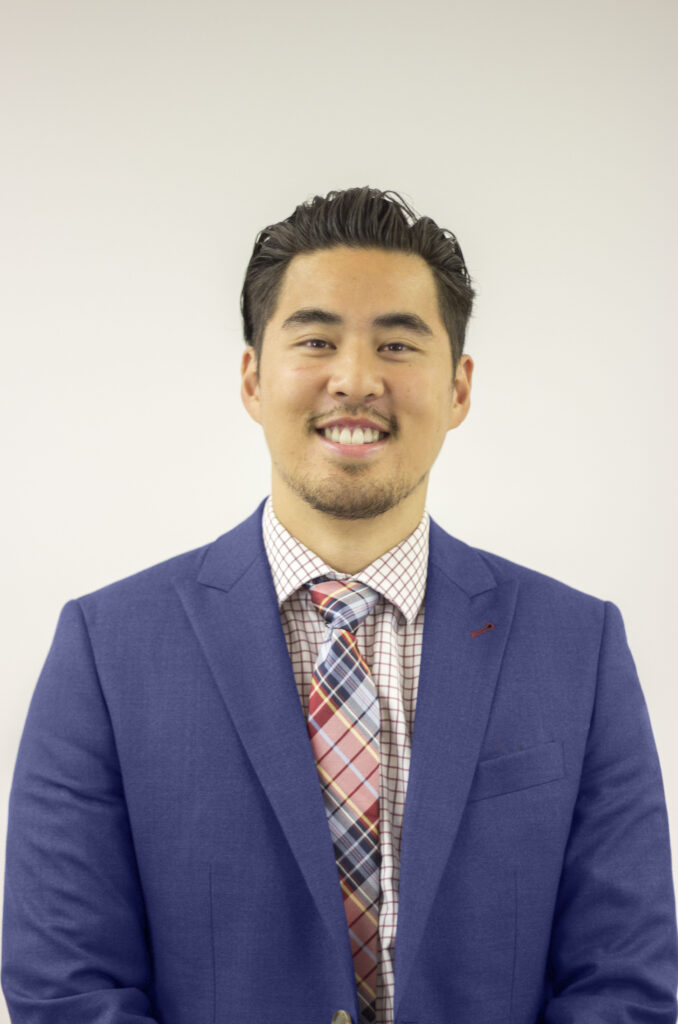
Aaron Chin is the CEO and second generation owner of Organika Health Products, the company his father founded in Vancouver, British Columbia, Canada. In that role, Chin has sought to innovate, paring down the company’s product line in order to scale up the business. In this interview, he discusses his experience as a NextGen leader, working alongside his brother, Jordan, to modernize the business and foster an entrepreneurial culture, while continuing to honor their dad’s vision.
This conversation has been edited for length and clarity.
Family Business Magazine: How did you first get involved in the family business and what was your path to becoming CEO?
Aaron Chin: What my dad was incredible at was never ever forcing us in the business. I feel like he was very methodical and strategic about exposing us to the business and getting us excited, inviting us to his different trade shows and different Christmas parties and summer picnics. I think from there [our interest grew from] just hearing more about my dad’s story and how he built the business and the hardships he had to go through in order to build the business.
I think that really inspired me to say, ‘I want to work here one day. I’d like to take over one day.’ In the natural health world, it’s predominantly Caucasian people and my dad was selling health products as an immigrant from Malaysia in the late ‘80s and early ‘90s and going to different places where you would never see Asians. So, I think hearing his stories of how the catalog was ripped up in his face, he was thrown every obscenity in the book and told to get out of the stores — it was really cool to see how he persevered and how he built the company to where it was when we joined the business. So, that’s how I got involved in the family business and [then I continued] working summers in all the different departments and working different trade shows. I think I always knew I wanted to work in the business. Essentially, in university, I said, ‘Organika is where I want to be and Organika is where I want to grow.’
FB: So, you come into the business, you obviously have respect for your father and for the legacy of the business, but there are some changes that you want to make, especially once you become CEO. What were some of the first big changes you tried to make within the business and how were they received both internally by other employees and your father, as well as externally by your clients and customers?
AC: Organika was in a very unique position when we joined because at that time my dad had really taken a step back and hired a management team to run the business. And I remember my first day full-time in the office, we were fresh out of university. My dad had put me in purchasing when I always wanted to be in sales and I was like, ‘Why the heck is he putting me in purchasing?’ But there was a lot of wisdom to the moves that he made and the positions that he put us in in the beginning.
On my first day, we had this old Taiwanese man who had been running our purchasing for over 10 years at the time. I thought, ‘I’m the boss’ kids showing up for his first role in the business, he’ll be there early to greet me.’ That was naiveté. I walked in and nobody greeted me. He came in a bit late. He checked his phone and I heard there were 15 voicemails and my new boss just went delete, delete, delete, delete, delete, delete, delete…
I think the best way to explain what my brother and I came into at Organika is that we really needed to chop the roof off the house. We needed to keep the foundations that my dad built, but we really needed to turn the house upside down and shake out every single lamp lighting, fixture, carpet, couch and really reset the whole business. So that’s what we tried to do. We tried to really make changes at the people level, the product level, but also at the distribution level. So, coming with that mindset was huge, but the employees definitely didn’t like it at the time. There was a lot of pushback because even if you deserve to be in that position, there are always going to be people in a family business saying you don’t deserve to be in this position no matter what you do. No matter how much growth you bring the business, people are always going to say, ‘This guy or this girl had a silver spoon and they were fed everything and they don’t deserve anything,’ right? So, I think — for me, anyway — not really caring about that at the beginning and just being young and hungry allowed me to work through a lot of stuff rather than creating stories in my head where it would hold me back from doing things. It was really bold for us at the time, making these moves and making decisions involving people who were essentially 15, 20, 30 years older than us.
But I will give a ton of credit to my dad because the same way he raised us — ‘Hey, there’s no curfew, I just don’t want to pick you up from jail the next day’ — is kind of what he did with the business. He said, ‘Here are the keys to the kingdom. Don’t screw it up. But involve me in the big moves that you want to make and let me give you my wisdom and thoughts. And you guys, if you believe in it, go for it.’
FB: I love that metaphor of keeping the foundation, but then chopping the roof off the house so the business can grow. But was it ever difficult to balance this need to modernize the business with trying to uphold that legacy and the values that you admired so much about what your father built?
AC: Yeah, absolutely. When we started, we had over 600 different products and my dad’s whole purpose of launching Organika was very simple: help people live healthier. When we came into the business and we had 600 SKUs, which was way too many — probably 300 too many SKUs for the size of business we were. So, when we came in, I remember the conversation with my dad and my brother where we were like, ‘Dad, we’ve got to chop, like, all of these.’ And he’s like, ‘No, Sally in Saskatchewan still buys this product and she’s got 10 customers that buy this product so we need to sell it.’ There were a lot of hard conversations of, like, ‘Dad, we get it. But in order to scale, in order to grow and eventually impact more people, we need to get more strategic with our product line and the focus that we have as a business.’
FB: And so, as CEO today, if you want to foster a culture of innovation and not being afraid to shake things up in the company, how do you do that?
AC: I think it’s a mindset thing. One way I always describe us as a business is that we’re a 35-year-old startup. So, when I say that, it’s like we have the legacy, we have the track record, but you need to have that startup thinking of, ‘How can we make things better all the time?’ And if you have that mindset of making things better all the time, you will always succeed as a business because you’re always humbling yourself to say, ‘OK, what can I do better or what did I do wrong and what can I fix?’ rather than saying, ‘Everything is OK, and let’s just leave it at OK.’ The best thing that we did was read the book, The Ideal Team Player by Patrick Lencioni, where he talks about how the ideal team players need to be hungry, humble and ‘people-smart.’ So, if you can kind of capture that within your business, you set yourself up for a lot of success.
FB: You just talked about how you were trying to modernize your business while upholding the legacy and values the business was founded on. Do you have any advice for young leaders who are dealing with the same issue?
AC: I think a lot of it is just going back to why your business was started in the first place. Because I understood that my dad’s mission was to help people live healthier, as long as we were staying within that mission, he was always for it. There have been many times where someone has said, ‘Hey, do you want to launch a product that’s not necessarily healthy for you?’ It would have made us a lot of money, but we said no because you’ve got to go back to the mission. So, I think earning that trust and really bringing on the previous generation into what your plans are and what you want to do with the business really helps. What happens a lot of times is that the biggest fear from the previous generation is ‘I’m not going to recognize my business.’ But that’s also a good thing. Bringing you father or your aunt or your uncle along in the decision-making process and showing them how and why things are changing is extremely key.
I’ll give you an example in our business: Before [my brother and I] joined, [Organika was]100% pills and tablets. One day when we were sitting around the table — we were probably six months working in the business — and my younger brother, who’s quite a bit younger than us, was still in high school at the time. He actually just recently joined the business, which is kind of cool. But we sat around the table and we said, ‘Gabe, what did you have for lunch today at school?’ and he said, ‘I had a smoothie.’ And I said, ‘You had what?’ Back in our day, it was all pop and hot dogs and fries and burgers, but his cafeteria was serving smoothies. That was kind of the lightbulb moment for all of us going, ‘Hey, if we don’t change our business to become not so pill- and tablet-focused — and instead focus more on powders and liquids — we’re going to be obsolete in the next 10 years because there’s a whole new generation that’s not going to go out and look for health, they just expect it as part of their lives. So, how can we make it easier for them?’ That’s when we really pivoted our business so that powders are more than 60 % of our business today, whereas 10 years ago, they were 0%. I think bringing the previous generation along in the decision-making process and the vision, while also showing them the stats and data, helps create smoothness for everybody.