








This episode features a conversation with Laird Norton CEO Brian McGuigan, who reflects on stepping into a family legacy as an outsider, offering strategies for leading with continuity, clarity, and respect for tradition. In addition, we chat with David Weekley, founder of now-second-generation David Weekley Homes. He outlines his mission-driven ownership model — splitting equity among family, employees, and a charitable trust — to foster shared purpose and reduce the pitfalls of inherited wealth. This episode also features part 2 of our conversation with Jason Diestel, Heidi Diestel Orrock and Jared Orrock, fourth-generation leaders of Diestel Family Ranch. They share how they lean on adaptability, not hierarchy, to lead through crisis and generational change.
Support for this episode comes from Wharton Executive Education. Through world-class faculty and real-world application, Wharton’s Wealth Management and Family Office Programs offer participants a deep dive into the sophisticated financial concepts paramount to family office management. Learn more at whartonfamilywealth.com.
Interested in being a guest or have a topic you’d like to hear us discuss? Contact host Zack Needles, editor-in-chief of Family Business Magazine, at: zneedles@familybusinessmagazine.com.
Don’t miss an episode! Follow Family Business/Business Family on Apple Podcasts, Spotify, Amazon Music or wherever you listen to podcasts.
Guests

Brian McGuigan
Brian McGuigan became the CEO of Laird Norton Company in January 2023. He joined LNC in 2012 as Manager of Corporate Investments to build the company’s corporate development function. He went on to serve LNC in roles of growing responsibility over the course of the next decade, culminating in his promotion to CEO.
Brian is a director of Laird Norton Company and Laird Norton Properties. He also serves on the boards of LNC portfolio companies Laird Norton Wetherby (LNW), a wealth management firm, and Heartland LLC, a real estate advisory firm.
Prior to joining LNC, Brian was President and Chief Compliance Officer of Stonnington Group, a wealth management firm in Los Angeles. At Stonnington, Brian combined operational responsibilities with investment responsibilities that included origination, execution, and oversight of a range of private markets investments including direct investments in early-stage technology and consumer companies. Earlier in his career, he worked in technology consulting in the UK and Europe.
Brian was born in Zimbabwe and grew up in South Africa before starting his working life in the UK. He now calls Seattle, where he lives with his wife and two sons, home.
Brian received a BSc in chemical engineering from the University of Cape Town and an MBA from the USC Marshall School of Business. He is a CAIA Charter Holder.

David Weekley
David M. Weekley, Chairman of David Weekley Homes, began his home building company at the age of 23. In 2018, David was inducted into the Texas Business Hall of Fame for his distinguished business accomplishments and continued contributions to our community.
David Weekley is an avid student of the most progressive management methodologies, where people are the primary focus of the organization. The company has been named to Fortune magazine’s list of 100 “Best Companies to Work For,” 19 times, and closed more than $3.5 Billion worth of new homes in 19 different markets in 2024.
As a community leader, David has served on the Vestry at Palmer Memorial Church and is Past Chairman and Executive Committee Member of the Sam Houston Area Council of Boy Scouts, Past President of the Houston Chapter of the Young Presidents’ Organization, Past President of the Greater Houston Builder’s Association, former Chairman and Board Member of Metro Houston Young Life, former Chair of the Greater Houston Community Foundation and Trustee Emeritus for the Kinkaid School. David was nationally recognized with the William E. Simon Award by the Philanthropy Roundtable.
David holds degrees in Economics and Geology from San Antonio’s Trinity University. He and his wife, Bonnie, have been married for more than 49 years and have three children and eight grandchildren.
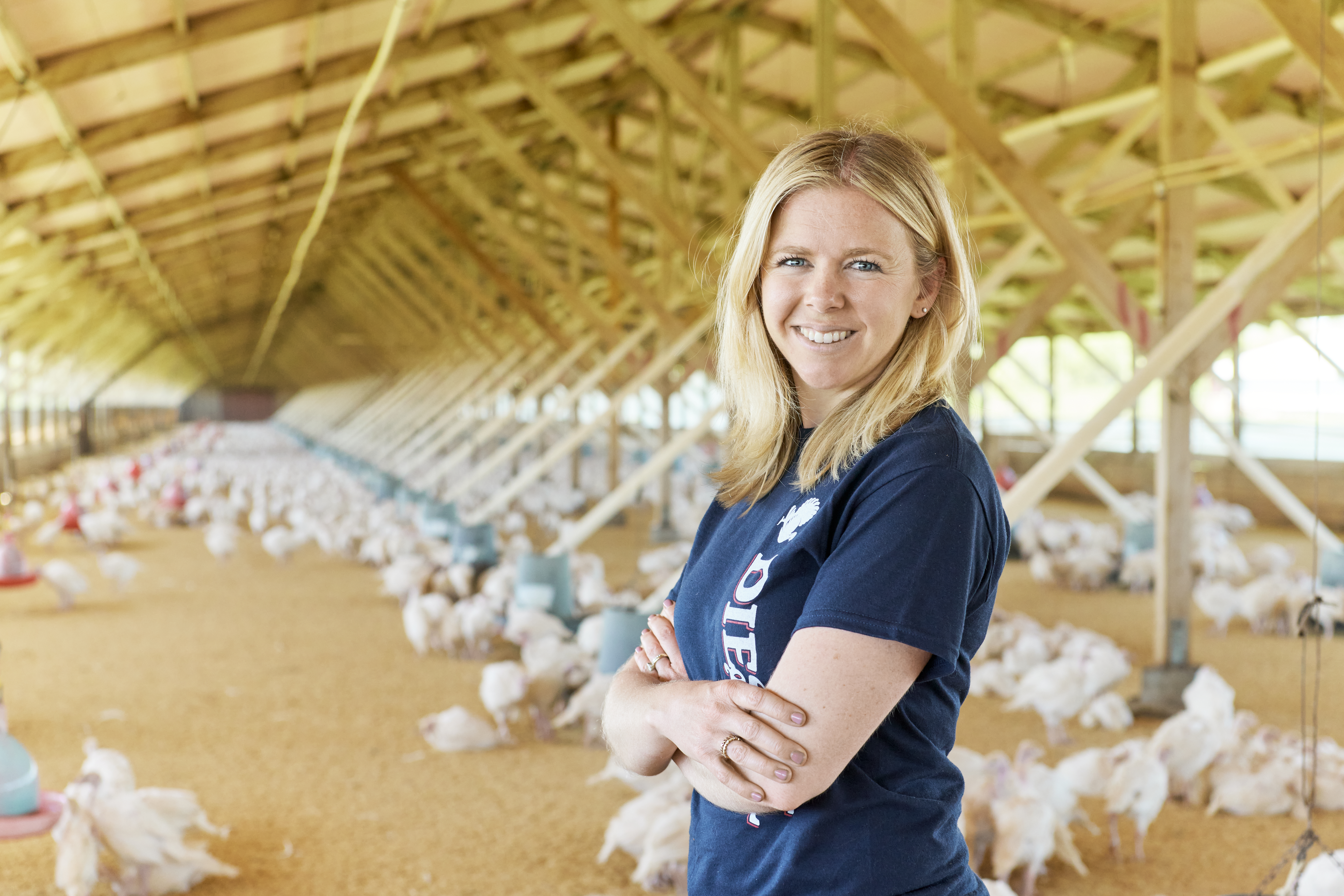
Heidi Diestel Orrock
Heidi Diestel Orrock grew up alongside her mom, Joan Diestel, working on the ranch, helping with customer service, and getting meat lovers excited about the bold taste of turkey at demos and trade shows across the country—when she wasn’t serving aces on the court.
Her mission (yes, she chose to accept it) is to help people eat better with pure, nourishing, whole foods — things like the lean, clean, protein raised on the Diestel Family Ranch. Heidi believes in advancing peoples’ understanding of nutrition and health so much that she received her Certified Personal Trainer Certification in 2006 from the National Academy of Sports Medicine. It’s really that important.
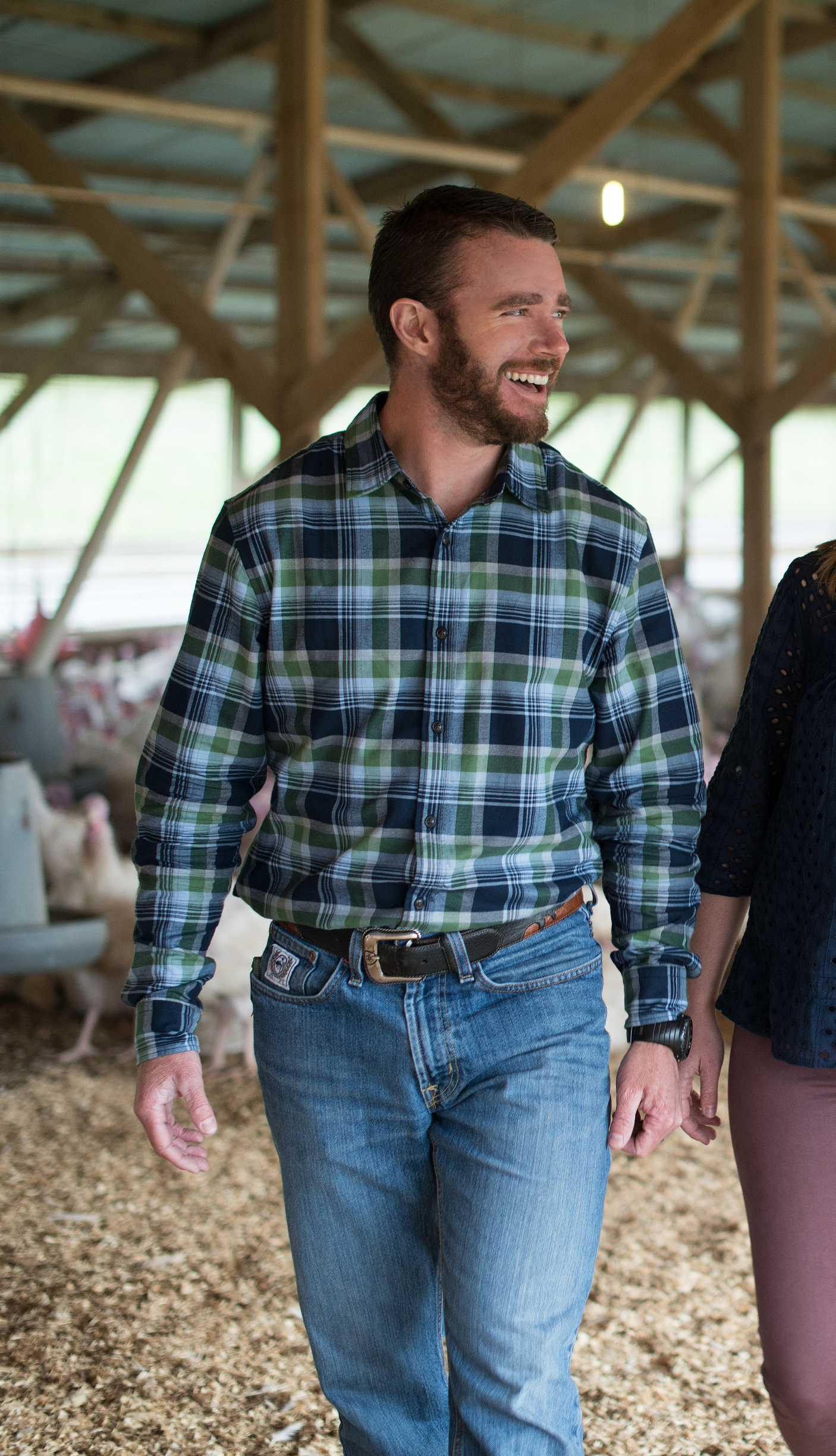
Jason Diestel
Jason Diestel has loved food and farming since growing up working alongside his dad, Tim Diestel, and his grandpa, Jack Diestel, on the ranch he now helps run.
Jason turned his attention to sustainable farming in college, where he led a humus composting project—the first of many excuses to nerd out on carbon farming and creating more nutrient-dense food, and what ultimately led to his role on the farm today.

Jared Orrock
Growing up in Sonora, Jared Orrock spent Thanksgiving and Christmas breaks helping his friends, Jason and Garrett Diestel, out around the farm, lending a hand with holiday distribution and attending the occasional trade show.
After several years in Silicon Valley working as a public accountant for various technology companies, Jared married Heidi Diestel and traded SaaS for sass, moving back home to join the Diestel Family Ranch team—first as Controller, then CFO, and now President, a role for which his M.S. in Agricultural Business and his MBA are well suited.
Transcript:
Narration (Zack Needles): Support for this episode comes from Wharton Executive Education. Through world-class faculty and real-world application, Wharton’s Wealth Management and Family Office programs offer participants a deep dive into the sophisticated financial concepts paramount to family office management. Learn more at WhartonFamilyWealth.com.
Brian McGuigan (CEO, Laird Norton): You can probably write down a set of behaviors—20, 30 behaviors—that are the things that make up your culture and ensure that people understand what those are. Explain, using stories from the past and the legacy of the business, why these are important behaviors in the business you’re in, and build—in a conscious way rather than an unconscious way—mechanisms to perpetuate those behaviors.
Narration (Zack Needles): That was Laird Norton CEO Brian McGuigan explaining how to help a new non-family executive become accustomed to your company’s culture and your family’s legacy as part of the onboarding process. We’ll hear more from Brian later in the episode.
Welcome to the Family Business Business Family Podcast. I’m your host, Zack Needles, editor in chief of Family Business Magazine. In this episode, I sit down with Laird Norton CEO Brian McGuigan, who reflects on stepping into a family legacy as an outsider, offering strategies for leading with continuity, clarity, and respect for tradition. I also chat with David Weekley, founder of now second-generation David Weekley Homes. He outlines his mission-driven ownership model, splitting equity among family, employees, and a charitable trust to foster shared purpose and reduce the pitfalls of inherited wealth.
This episode also features part two of my conversation with Heidi Diestel Orrock, Jason Diestel, and Jared Orrock of Diestel Family Ranch. They share how they lean on adaptability, not hierarchy.
Narration (Zack Needles): Support for this episode comes from Wharton Executive Education. Wharton’s wealth management and family office programs distill cutting-edge financial research into real-time knowledge that wealth managers, family office executives, and ultra-high-net-worth families can leverage as they prepare for the future. Learn more at WhartonFamilyWealth.com.
Narration (Zack Needles): This segment features part two of my conversation with Jason Diestel, Heidi Diestel Orrock, and Jared Orrock of Diestel Family Ranch, as they reflect on the business’s transition to fourth-generation leadership and how they redefined roles based on strengths rather than titles. If you missed part one of our conversation, check out episode 23.
Zack Needles: Heidi had mentioned that every year you have these inflection points of high stress and it’s challenging, but is there any sort of sustained period you can look back on as the most challenging for the company? If so, how did you all overcome that?
Jason Diestel: Yeah, rounding out that real quick with Jared, I like to think of the word “stewardship.”
Jared Orrock: Yeah. And if we have all the parts—no greater than the whole—the whole is much more significant. Everybody involved has to have a strong stewardship mindset, preserving and respecting the legacy that came before us.
Heidi Diestel Orrock: Right. Absolutely. It’s huge. So a challenging period—we had a pretty challenging period in 2022, right, Jared?
Jared Orrock: 2022?
Heidi Diestel Orrock: Yep. Fall—late summer—in 2022, or spring through the end of the year.
Jason Diestel: Yeah.
Heidi Diestel Orrock: We were directly impacted by avian influenza. That was a first for us as a company. It was unprecedented—and it happened in August. Nobody had heard of this happening to that scale in August.
Jason Diestel: So that was an extremely challenging period.
Jared Orrock: It definitely took us several years to recover. We had projects in the pipeline and we had to stop those projects. We said, “We’re putting everything on hold. We’re pulling in; we’re going to protect the business. We’re going to be very conservative, and we’re going to get through it as a team.”
Ultimately a lot of things changed, but through that experience the team came out stronger. We learned a lot. And I don’t think we could have done anything different to prevent or foresee it—which is the tough part. With most problems in our history, you feel like you have some say or you’re taking a risk and you know you’re taking a risk. This wasn’t like that. It was extremely challenging.
Zack Needles: Jason, you started off talking about stewardship and honoring the legacy and core values of the company. I’d imagine that became really important when you’re sitting there asking, “Do we really want to still be doing this risky business we’ve worked so hard on?” So what would you say are the company’s core values—and are they the same as the family’s core values?
Jared Orrock: If you were to talk to Jason and Heidi’s parents, the things they were obsessed about were product quality and customer service. They believed if they did those two things well, people would be interested in the product and those customers would continue repurchasing. That was everything to the prior generation.
When we looked at it, we said: Yes, those things are critical to our brand, our products, and our customers. But we layered in a few things—particularly a real emphasis on people, and that thoughtfulness component you touched on. While those were certainly important to prior generations, I think we’ve elevated them on the hierarchy of pursuits in this generation. It’s a combination.
Ultimately, for us, those are the North Star—the framework we make decisions from. And like I mentioned earlier, Tim and the family say often that we don’t care about being the biggest; we just want to be the best.
Another thing Tim discusses with me—maybe more with me than with Jason and Heidi—that’s interesting is he’ll occasionally come in and remind me: You don’t have shareholders here that you need to impress. We’re all ambitious people. We want to grow the business, innovate with products, bring on new customers. But he’ll say, “It’s just us. We don’t have anybody outside you need to impress. Keep that in mind and let’s do what’s right for our team, our customers, and our family. Then we’ll make the next decision next—let’s not get ahead of ourselves.”
That attitude allows us to focus on these values—which are our company values—but in a lot of ways reflect the focus of two different generations as it relates to our business.
Zack Needles: That’s a great example of what we mean by heritage and honoring the values in the original mission. It doesn’t mean you keep doing the same thing over and over and can’t change anything. The business is going to modernize. You want to grow. You want to build upon the values. It’s a framework you’re building upon.
With that in mind, families often don’t recognize when it’s time for the next generation to get involved and eventually take over. How did the Diestel family know it was the right time for this next generation to become the leaders?
Heidi Diestel Orrock: I’ll say my parents were interested in stepping away—which was helpful. They were interested in doing other things. My brother Jason was already back working in the business. Jared and I made the conscious decision and commitment to say, “We’re coming back. We’re going to start working in the business.”
We all kind of stood around and looked at each other and said, “Okay, what are the rules? What are the ground rules? How are we going to do this?” In that moment we all acknowledged: We have to create a process of transition.
None of us had defined goals like, “I want to be the EVP of whatever,” or “I want to be the president.” No one walked in saying those things. But we were asking: Who is the leader? How does this work? Who does what?
We hired someone in the industry—more of a family friend—to be a consultant. He’d worked in the industry a long time and took a great interest in us as the next generation. He knew someone who worked on brands—not brand from a marketing perspective, but brand from a cultural anthropology perspective.
Without really realizing what we were doing, this was one of the single most impactful exercises our family ever did. She came to Sonora, got us in a room, and basically asked: “What does this business represent to you? Tim, Joan, what do you think when you look at this brand?” She walked us through an exercise that forced all of us to lay out our true emotional attachment to the brand and our aspirations for the brand—and therefore, in a way, our aspirations for ourselves.
We learned a lot about our own family culture and our town’s culture that shaped us—how we were raised, where we’re from—the grittiness it takes to be a farmer, that true blue-collar part of you when you have to get down and do what needs to be done. It also pointed out where we weren’t on the same page and our differences. My mom’s approach to managing and marketing the brand was very polished and refined—genuine and quality-driven. We knew there would be differences in how we would market the brand.
Unknowingly, it gave my parents the opportunity to individuate away from what they had created and what they knew the Diestel brand represented. And it gave Jared, Jason, and me a pathway to enter the power of, “We are now creating this in the fourth generation and what we’re going to do.”
From there it grew naturally. As the business evolved and changed, we acknowledged realities. For a while I was holding onto human resources and realized, “This makes no sense for me.” I’m not the best at HR—can we move this to somebody else? We adjusted through trial and error.
One of the key things in moving from the previous generation to the next is that it’s really challenging. Power is a funny thing, and humans have a hard time transitioning power. The previous generation has to be willing to let the next generation try and fail—and then try again.
Zack Needles: I love the sandbox idea—giving people a place to try things and maybe fail without jeopardizing the whole company. It’s a smart way to incubate talent in relation to the business and learn how to work in it. I appreciate you sharing your careers and how they intersected in this family business. It’s fascinating. Thanks for talking with us.
Heidi Diestel Orrock: Thank you.
Narration (Zack Needles): David Weekley founded David Weekley Homes in Houston, Texas, in 1976. The company is now in its second generation of leadership. In this segment, he shares the story behind his homebuilding company’s unique ownership structure—one-third family, one-third employees, and one-third charitable trust. He also explains why unearned wealth can be more harmful than helpful, and how aligning incentives across owners, employees, and the community keeps the company grounded.
Zack Needles: Hi David, thanks so much for joining me.
David Weekley: I’m excited to be here. Thank you.
Zack Needles: Absolutely. So let’s start with a little bit of history. Tell me about the history of your family business—you’ve been involved since the beginning.
David Weekley: First of all, we’re almost 50 years old, and I hadn’t really thought of it as a family business until the last 10 years or so—it was just a business. I started when I was 23 with my brother’s financing and my deep experience in the building business at a young age. We got going, things did well, and we’ve been through a couple of serious downturns, but we’ve made it through and continued to grow. Now we’re about a three-and-a-half-billion-dollar business in 19 cities and seven states, so it’s gone well for us.
About 10 years ago I got my family together and asked if they cared whether this business continues. We brought in consultants, had a weekend talk about all kinds of things, and they said, “Yeah, we think it’d be great if this business continues.” That set me on a path to structure the company so it could continue—and hopefully be private—for the next 50 or 100 years.
Zack Needles: Absolutely—and I want to talk about that structure. As you mentioned, you didn’t start thinking of it as a family business until that conversation about continuity. How many family members are currently owners and/or working in the business?
David Weekley: My brother and I, the primary stockholders, set up trusts with some stock about 20 years ago. We each have three kids. Currently, my brother and I and six individual generation-skipping trusts for the kids are owners—so hopefully some economic value will stay with the family for a long time. Figuring out control is a whole other issue.
Zack Needles: And the structure we’re talking about is one-third employee-owned, one-third charitable trust–owned, and one-third family-owned. Is that accurate?
David Weekley: Yes. When I started figuring out what to do with the stock 15 years ago, the usual choices were go public or sell to someone else. I didn’t want my 50 years of effort to disappear—because we do a great job for customers and our team. We’ve been named 18 times to the Fortune 100 Best Companies to Work For list. I didn’t want that to go away.
So what does it look like to run a significant private company and involve family—knowing unearned wealth can harm future generations? It’s a real challenge. I called lots of private families and came up with the concept that employees should own a significant portion. For 20 years I’d had 40 managers owning small percentages; it served us well—they didn’t have control but had real economic interest.
We established an ESOP for 15% of the business, making about a third owned by employees. I love the alignment: when we do well, they win, as does the family.
I’ve been giving 50% of my earnings to charity for the last 30 years, and I wanted a significant portion of company earnings to continue going to charity. We set up a charitable trust that will fund future generations’ education. There’ll be more earnings than needed for that, so the majority from that one-third will be distributed to charity each year.
The last third is for the family. I described those trusts, but importantly, control: I currently have 100% control. Over time, it will transition to what we call the Family Stewardship Council—three of the six kids who are business-minded. Control will go to them in the future.
Zack Needles: Let’s revisit the history. You mentioned significant downturns. What was the most challenging period for the business, how did you get through it, and what did you learn?
David Weekley: We’ve had two really significant downturns. One was in the mid-’80s. We started in 1976, were building a bunch of homes, and I thought I was God’s gift to homebuilding—building a big house for myself—everything great. Then in Houston the market dropped from 30,000 housing starts to 6,000 in a matter of months. That’s when we first expanded to other markets—Austin and Dallas. We got through the Houston downturn thanks to those markets, but I had to sell my big house, cut my salary, and we laid people off. It was a close call.
The other tough one was the 2008 financial meltdown. We had to lay off 1,000 people. Very difficult—but we made it through. Since then, we dramatically changed our debt level and some of our structure so we’d never be in that kind of situation again. We came through tough times because managers and leaders with stock ownership were rowing alongside me, making difficult decisions to get us to the other side. That’s part of why I’m excited about and appreciative of my team—because their wealth and future are on the line just like mine.
Zack Needles: Two related questions: Family and company culture can be hard to preserve as a business scales—more people, more geography. What has helped you maintain a purpose-driven ethos through decades of growth—and how do you balance innovation with founding principles?
David Weekley: Our company purpose is “Building dreams, enhancing lives”—for our team, our customers, and our community. Our team comes first; if we take great care of them, they’ll take great care of customers. We measure customer satisfaction in a detailed and rigorous way. We’re currently about 4.8 out of 5 stars—the highest of any builder in the country. If we do well by our team and customers, customers will pay us well—and we want a portion of earnings to help the world. That’s been my theory for 30 years, and we embedded it in the ownership structure.
On innovation: Fortunately, I’m a founder with a curious nature—“good enough never is.” The challenge in some family businesses is whether second, third, fourth generations will take risks and see themselves as growers and risk takers, versus holding the reins saying we’re good enough. The world changes dramatically every year; we wouldn’t be where we are if we hadn’t changed dramatically.
I’m fortunate the second generation involved is excited about making changes and moving forward—and hopefully that spirit continues. One phrase we use, instead of “it’s never good enough,” is “forever improving—a team driven to excellence.” My team helped reframe my ethos into that.
Zack Needles: Last question: You’ve set up the one-third/one-third/one-third structure, have second-generation involvement, and a plan to pass control to family members. What do you envision for the future of your family business?
David Weekley: My hope is we continue with the same ethos of building and enhancing lives—starting with our team, our customers, and our community. Our Family Stewardship Council has been meeting for six years. The goal and part of the training is that stewardship is a responsibility, not an entitlement.
We have an independent board of directors. The Family Stewardship Council’s responsibility is to approve the board slate and they can hire and fire them. They will have fiduciary responsibility for the company. My family needs to be involved enough, know enough, and be the core holder of our beliefs and structure. Our hope is that the Family Stewardship Council keeps the company on the straight, narrow path and follows through on what we’ve created over 50 years.
Zack Needles: Excellent. David, thanks so much for taking the time to chat about your history and your business. It’s a fascinating story.
David Weekley: Let me also mention: When I interviewed and talked with a lot of family businesses, we determined you can be great owners without being in the business and without being the CEO. With our independent board and others—my son is president of the company and is doing a fabulous job representing us and being the Weekley continuity. At the same time, we have an outside CEO and have for many years. Families can be great owners without presuming you have to be the CEO of a three-and-a-half-billion-dollar business.
Zack Needles: Absolutely. It’s an important point we’re hearing more and more—ownership doesn’t have to mean being in the C-suite. Thanks again, David. I appreciate your time.
Narration (Zack Needles): In our final segment, Laird Norton CEO Brian McGuigan discusses the challenges and benefits of stepping into the top role at a seventh-generation enterprise as a non-family leader. He also shares advice on navigating leadership transitions, codifying culture, and preserving legacy while moving forward.
Zack Needles: Hi, Brian. Thanks so much for joining me today.
Brian McGuigan: Hi, Zack. Good to be here. Thanks for having me.
Zack Needles: You stepped into the CEO role during a time of major transformation in the business. Tell me about that—what lessons did you take away from managing that level of leadership change?
Brian McGuigan: As you point out, there was a lot of change when I became CEO. Our board chair, a prior CEO, and the person who runs our real estate division (our president) all retired at the same time. We had a new batch of people in all at once. Meanwhile, we were trying to grow our largest operating business, LNW, a wealth management business, and respond to a major shift in the real estate cycle.
First lesson—one the family learned years ago—is to be careful and diligent in planning for transitions. There were a lot of transitions at one time, but none was a surprise. All had been worked on for years, with communication to shareholders, employees, and the marketplace about what was coming. Communication after the fact, too.
In that first two or three years—really always—communication from new leaders needs to be clear, candid, and transparent so employees and owners can build trust and confidence. Not just talking—listening. Listening to understand, not listening just to respond. And being open to course corrections—adapting as new information arises. That’s strengthened our new group as we’ve learned to work together.
Zack Needles: Change is hard. While most family business owners want to keep the business in the family, only a fraction have a formal succession plan. What do you see as the biggest barriers to effective succession planning—and how can families begin to overcome them?
Brian McGuigan: Families tend to avoid difficult conversations—who’s going to lead, who’s in ownership, what the governance structure is. Those are hard discussions. Delays can stem from psychological factors: keeping the peace, principals not wanting to face mortality, principals protecting heirs as long as possible, and other reasons.
A second set of issues is structural. Especially in first-generation businesses, roles blend—the same person may be an owner, executive, director, and family leader. In more mature businesses those roles are in different hands. Many struggle to differentiate and disentangle the roles, and that creates inertia.
Zack Needles: What signs should a family look for to know it’s truly the right time for a generational transition?
Brian McGuigan: There are obvious signs—current leaders get disengaged, show fatigue, stop being innovative, get complacent. Less obvious is assessing whether the next generation is ready. Giving emerging leaders the reins when they’re ready has value, rather than timing it solely by when current leaders want to step aside.
Even if you won’t do it in one step, you can start an evolution—step people in so you don’t miss the window. Talented, ready people will eventually go do something else if not given the opportunity.
Zack Needles: Sometimes there isn’t anyone in the next generation who’s ready or interested. When should a family consider looking outside to fill a leadership role?
Brian McGuigan: The most obvious case is when there’s no qualified candidate—no one with the skills or experience—or those who are qualified don’t want the job. Other situations include scaling: the leader from zero to one million, one to ten, ten to a hundred might be different people. Bringing in someone to professionalize can help when moving from entrepreneurial to enterprise.
If there’s family conflict, an outsider can be an objective, honest broker. And when the business is under stress, outside eyes can be valuable.
Zack Needles: You’re a non-family executive leading a seventh-generation enterprise. Any advice for onboarding non-family leaders so the initial integration is smoother?
Brian McGuigan: I had an interesting transition because I didn’t join to take this role—I joined a decade earlier. I got to know people inside and outside the company, and developed an appreciation for the history, mission, and DNA. Bringing in someone new—give them a real feel for that history, DNA, and mission to avoid missteps that have to be corrected later.
In our company there are no family employees in executive roles—only a couple of family employees in defined roles. In many companies you have family employees, and sometimes everyone knows they may not be the greatest performers (and some are great). It’s challenging for a non-family executive to fire a family member. You can do that executive a favor by removing those people from those positions before they start—if you know it’s going to happen. Let them keep their political capital.
Also, establish clear roles: owners, board/governance, executives, and “family.” Avoid situations where someone feels they have authority they don’t—or the reverse.
Zack Needles: Let’s connect that to preserving legacy and culture while evolving leadership and the business. How do you do both?
Brian McGuigan: If there were a simple answer, we’d all use it. But there are intentional things that help. First, select leaders for fit with the legacy and culture—assuming you like them and believe they’re part of your success.
Second, codify the culture. Many people absorb culture by osmosis, but you can and should figure out what it is. One definition of culture is a set of behaviors and rituals. So you and I know in a business setting we shake hands—you don’t have to be told, you just know. In a business, what are the expected behaviors?
You can write down a set of behaviors—20 or 30—that make up your culture and ensure people understand them. Explain, using stories from the past and the business’s legacy, why these are important behaviors. Build mechanisms, consciously, to perpetuate them. That goes a long way to smoother leadership transitions.
Zack Needles: I appreciate you taking the time to share these insights.
Brian McGuigan: My pleasure. And I think somebody in the family would be unhappy if I didn’t mention that the children being born today are eighth generation. They like to say eighth generation now rather than seven.
Zack Needles: That’s great—and shows they’re looking toward the future. Brian, thanks again for chatting. Hope to talk again soon.
Brian McGuigan: Thanks, Zack. It’s been my pleasure.
Narration (Zack Needles): We’re excited to introduce Family Business Compass, the premier national membership community designed exclusively for family business CEOs, family business chairs and directors, and family council chairs. Our focus is what makes these roles different: family. We’ll provide the connections, insights, and resources you need to navigate leadership and governance challenges with confidence.
Narration (Zack Needles): Built on 35-plus years of strengthening family dynamics and driving business success, Family Business Compass is created for leaders like you. Apply for membership today on our website, familybusinessmagazine.com/family-business-compass, and take the next step toward stronger governance, better leadership, and lasting success.
Narration (Zack Needles): We hope you’ll also consider joining us at our upcoming fall conferences—Family Business Legacy, taking place September 10–12 in Dallas, Texas, and Transitions Fall, taking place November 5–7 in San Diego, California. For more information on both events, visit familybusinessmagazine.com/events.
Narration (Zack Needles): That’s it for this episode of the Family Business Business Family Podcast. If you have ideas for an episode or would like to be a guest, please reach out to me, Zack Needles, at zneadlesatfamilybusinessmagazine.com. Talk to you soon.