








In this episode of the Family Business/Business Family podcast, Tony Brausen, a veteran former executive and current board director for several major companies (including 2025 Private Company Board of Year honoree Adolfson & Peterson Construction), discusses how family businesses can marry career development and succession planning — and how the board can help.
This episode also features an interview with Brian Birdy, leader of third-generation PMI Birdy Properties in San Antonio, Texas, who discusses balancing his family business with his new gig as the southern regional developer of indoor pickleball court franchise Dill Dinkers.
This episode also features more of our conversation with previous guests Olivia Reilly-Mountz and Brad Mountz, who recently sold their family business, torque tool manufacturer Mountz Inc., to Snap-On but stayed on as executives at the company.
This episode is brought to you by Element Pointe, an independent multi-family office and wealth management firm dedicated to guiding individuals and their families through important financial, investment, lifestyle and interpersonal matters — in turn, helping clients build a secure future and enduring legacy.
Interested in being a guest or have a topic you’d like to hear us discuss? Contact host Zack Needles, editor-in-chief of Family Business Magazine, at: zneedles@familybusinessmagazine.com.
Don’t miss an episode! Follow Family Business/Business Family on Apple Podcasts, Spotify, Amazon Music or wherever you listen to podcasts.
Guests

Tony Brausen
Tony Brausen has extensive Board of Directors, Compensation Committee and Audit Committee experience and has previously served on boards for Imation Corporation, FEMAC, and the University of St. Thomas in St. Paul, Minnesota.
Currently, Tony is serving on the three Boards, including Adolfson & Peterson, Inc., where he is the chair of the Compensation Committee and serves on the Audit Committee; Fraser, Inc., where he serves on the Finance/Audit Committee; and is serving as Chair for Opus College of Business (University of St. Thomas) Strategic Board of Governors where he is also the Chair of the Executive Committee. Tony also currently serves as an adjunct professor in the MBA program at the University of St. Thomas and is a frequent guest speaker in their Law School and Executive MBA program.
During his career, Tony was Senior Vice President of Finance for The Mosaic Company. At Mosaic, Tony led the 700-person Global Finance and IT organizations, led the strategic planning process and worked closely with the Board of Directors, Audit Committee, and Compensation Committee. Prior to that, Tony was the CFO of Tennant Company, where he led a 100-person team. Prior to that, he was a Finance Executive in a variety of roles at International Multifoods Corporation (subsequently acquired by the JM Smucker Co.). Tony began his career at KPMG.

Brad Mountz
Brad Mountz began his career at Mountz in 1982, during college, in the machine shop. He has served in every department at Mountz and led significant initiatives, including designing and implementing compensation, sales, marketing, quality, customer satisfaction, product management, and management systems. Brad’s talents include creating growth initiatives, selecting talent, aligning people toward a vision, goal, or project, and delivering agreed upon outcomes. Brad enjoys working with customers and partners but thrives in helping people achieve goals and unlocking superior performance. “The work is challenging, and the people motivate me to bring my best every day,” said Brad. “It is gratifying to see the company and its people grow and accomplish objectives together. It is personally fulfilling and purposeful.”
Brad is married and has four children. As a San Jose State University alumnus, he actively supports their athletic scholarship programs. As a former baseball athlete, Brad loves outdoor sports. He enjoys reading, traveling, periodic golfing, and fishing and cherishes free time with his family and friends. Brad has been an active member of The Alternative Board and Vistage, CEO peer groups, and serves on several advisory boards. He is involved in his local church community and is an ardent supporter of free enterprise.

Olivia Reilly-Mountz
Olivia Reilly-Mountz joined the family business in 2018 as a Business Development manager. She is the daughter of Brad Mountz and granddaughter of Don Mountz, the founder. Olivia focuses on business strategy development and implementation, including helping to develop the next generation of leaders at the company and driving organizational excellence across the organization to achieve its vision. Her passion is coaching and mentoring, especially with women. She enjoys the organization’s people, culture, and executive leadership opportunities. “I will drive strategy and build high-performing teams that execute our goals. I will positively contribute to the culture by growing and mentoring future leaders in the organization,” said Olivia.” I am proud to sell a product that makes the world a safer place.”
Olivia and her husband welcomed their first child at the end of 2021. She enjoys traveling to Europe, cooking healthy food, and spending time by the ocean with family. Olivia graduated from the University of Arizona with a B.A. Communication and a minor in Political Science.
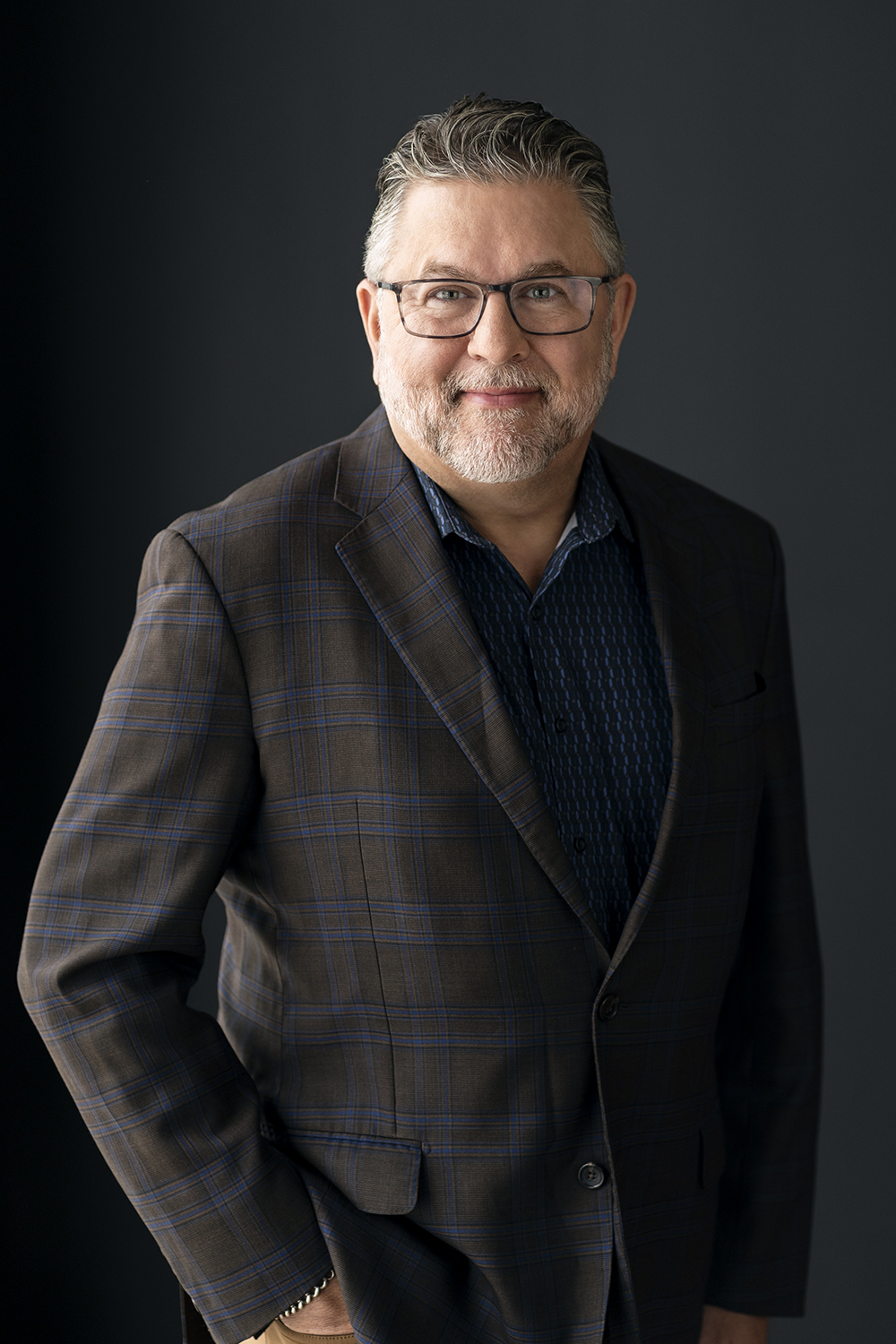
Brian Birdy
Brian Birdy is a U.S. Air Force veteran and the CEO of PMI Birdy Properties, a San Antonio-based, family-owned real estate and property management firm. Under his leadership, the company has grown into one of the largest property management firms in Texas. Brian also serves as the Franchise Owner and Regional Developer for Dill Dinkers in South-Central Texas, with plans to open up to 20 locations. The first, Dill Dinkers – Blanco Market, opened in May 2025, and a second, 10-court facility near UTSA, is now under construction and set to open in Fall 2025.
Segment 1: Olivia and Brad Mountz – Life After the Sale
Guests: Olivia Mount & Brad Mountz, former owners of Mounts Incorporated
Summary:
- Olivia and Brad reflect on the emotional journey of selling Mounts Incorporated to Snap-on in 2024.
- Brad shares that although he no longer owns the company, he continues to lead with enthusiasm, embracing Snap-On’s focus on compliance and safety as a net positive.
- The sale hasn’t changed the family’s communication—Olivia and Brad still talk frequently and continue to be involved in the company.
- Olivia discusses the fear of losing closeness with her father post-sale but found the relationship remained strong.
- Together, they’re considering launching an advisory firm aimed at supporting small family businesses with succession, governance, and leadership development.
- The Mounts emphasize how shared business values and transparency helped maintain strong family bonds through conflict and transition.
Segment 2: Brian Burde – Balancing Legacy and Entrepreneurship
Guest: Brian Burde, President of PMI Burde Properties and Southern Regional Developer for Dill Dinkers
Summary:
- Brian recounts the founding of PMI Burde Properties by his father in 1979 to help military families manage unsellable homes in San Antonio.
- He formally joined in 1997, modernized operations, and brought in multiple family members across generations.
- Brian launched a vacation rental division (later spun off by his brother) and focused on sustainable growth.
- Recently, Brian opened a Dill Dinkers indoor pickleball franchise to address the lack of indoor play spaces in hot, wet, or windy climates.
- He credits systems, delegation, and strong family involvement for allowing him to balance his responsibilities across both ventures.
- His team’s initiative—like taking over social events—is highlighted as a sign of healthy succession planning in action.
Segment 3: Tony Brausen – Succession and Career Planning from the Boardroom
Guest: Tony Brausen, board director and former finance executive
Summary:
- Tony emphasizes that CEO succession is a board’s top responsibility—and it must start the day after a new leader is appointed.
- He details a three-part succession planning process: identifying candidates, assessing readiness, and creating development plans.
- At Adolfson & Peterson, a scoring system is used to objectively measure successor readiness and track development over time.
- Tony also discusses career planning from the employee’s point of view—focused on personal aspirations and proactive engagement with supervisors to close skill gaps.
- He distinguishes between succession planning (company-driven) and career planning (employee-driven) but highlights their intersection in shared development goals.
- The approach boosts engagement and builds leadership pipelines, as seen in Mosaic’s success.
- He advocates for boards to embed these practices throughout all levels of the company, not just at the top.
This episode is brought to you by Element Point, an independent multifamily office and wealth management firm dedicated to guiding individuals and their families through important financial investment, lifestyle, and interpersonal matters. In turn, helping clients build a secure future and enduring legacy.
is I think about responsibilities of boards of directors. In my mind, right up there at the top, if not number one, is CEO succession. And maybe we’ve just appointed a new CEO, promoted one from within or brought them from the outside. The next day, our job starts over again. Start preparing for the next one. It’s a little bit like politicians when they win an election. The next day, they start running for reelection.
That was Tony Brausen, a veteran former executive and current board director for several major companies, discussing how privately held family businesses can marry career development and succession planning and how the board can help.
Welcome to the Family Business Business Family podcast. I’m your host, Zach Needles, editor in chief of Family Business Magazine. In addition to my interview with Tony Brausen, this episode also features an interview with Brian Burde, leader of third generation PMI Burde Properties in San Antonio, Texas, who is now branched out to become the Southern Regional Developer of indoor pickleball court franchise, Dill Dinkers.
This episode also features more of my conversation with previous guests, Olivia and Brad Mountz, who recently sold their family business to Snap-On, but stayed on as executives at the company.
Support for today’s show comes from Element Point. We built the wealth management firm we would want for our own families. As your trusted partner and advisor, we deliver the white glove service you deserve in structuring and operating your family office. Our highly tailored financial advice, investment management, holistic reporting, and most importantly, the lasting relationships built with the families we serve are what has motivated us for nearly a decade. Connect with us at elementpoint.com.
Element point, planning thoughtfully, investing wisely.
In our first segment, previous guests, Olivia and Brad Mountz, talk more about adjusting to life after owning a family business. Torque tool manufacturer, Mounts Incorporated, a company they still work at after selling to Snap-on in 2024. Hi, Olivia. Hi, Brad. Thanks for joining me today. Awesome. you for having us. Yeah, thanks so much, Zach. Appreciate it. What was the, from an emotional standpoint, what was this decision like for you? Yeah, I mean,
I don’t really feel like it’s dramatically different other than the fact that I have a boss and my wife chuckles at that all the time. She thought she was my boss, outside of that, and she’s right, we’ve been married 35 years and had had a wonderful, she’s been such a wonderful supporter of me in the role of running a family business. It’s amazing. ⁓
You know, I don’t really feel, ⁓ I still feel motivated to come to work. I really have a goal to, I don’t have an employee agreement. So I insisted that my employee agreement, I’m in the state of California. We’re an at will state. I’m no longer a shareholder. I should be able to leave if I don’t like you and you should be able to get rid of me if you don’t like me without there being any legal hassle. They agreed to that.
⁓ So we’re sort of ⁓ in a, I think it’s a nice relationship of ⁓ dependency, right? Yeah. And so, ⁓ you know, I just feel I’m doing the exact same thing as I did before, but I want to make my, naturally I’ll leave at some point, but there is no schedule for that. They told me we want you to stay as long as you feel like you’re contributing and you enjoy this. ⁓
And, you know, if you’re not enjoying it, then obviously you won’t want to stay. So, so far I’m enjoying it. I think that ⁓ there’s not, there’s certain things when you’re sold to a publicly traded company versus another private company that become apparent right away. And it has a lot to do with financial compliance, health and safety, regulatory compliances. ⁓ But I really see that as a benefit.
to our employees, not a detractor. Yes, it’s more work. Yes, it’s more pressure. But I need to have a safer work environment because a publicly traded company is saying, hey, you need to fix this or do that, or have you considered this or considered that. That’s a benefit to the employees to work in a safer work environment than maybe what you can provide as a private company or even know to provide as a public company. ⁓
opportunities to ⁓ grow into other divisions of Snap-on. Snap-on has 35 factories around the world. They have multiple brands they’ve purchased over the last 25 years. They’re looking for great people to join their organization. And so that’s very fulfilling to feel like ⁓ there’s more opportunities for people within the business than what we could have provided as a hundred person company. Right.
And so I’ll ask this last question and I ask it because you you see sometimes when a family has a long running operating business and they sell it, sometimes that’s better for the family relationships, but sometimes it kind of they scatter, right? Now that you’ve sold, do you have other ways of staying engaged with each other as a family? And is it it formal governance like a family council or a family office or just sort of what does that look like now that the operating business
You know it’s not a family limited partnership ⁓ that all of the properties that the businesses operate on are are ⁓ part of the family of the partnership of which Olivia is a limited partner and her sisters are limited partner. So that’s always kept us talking about financial things and educating the our girls on financial things and helping them understand, you know how businesses operate that.
definitely keeps us together. ⁓ The fact that we now have ⁓ two and we have two grandchildren from Olivia and another one coming from our younger daughter, that certainly keeps us together. But from a business perspective, I don’t really feel that anything has changed. We always get together. We always talk about ⁓ financial things. We still talk about business over dinner like we did before we sold. And Olivia, what would your comments be?
Yeah, so it’s interesting because when when I had the honest conversation with my dad, which, by the way, I it probably took me. A year to to really think about it and make that decision right before I even had the conversation with him, like I said, I had ⁓ several advisors that really helped me come to the decision. But one of the things that I was so worried about was because.
Was that factor of like, my gosh, am I not going to talk to my dad as much as we talk, right? Like we’re talking every day and we’ve, we were close before, but you know, you develop an even close, you know, even more closeness, I guess when you’re always near physically near each other, right? Yeah. Yeah. And just, I just felt like, Oh my gosh, I’d miss seeing him every day at the office or whatever. Right.
So that was one of my fears, which we’re still at the organization. So again, for me, it doesn’t feel like it’s much has changed. But interestingly enough, you know, something that my dad and I have been talking about right now and what what is our when we talk about like, what is the next step for us? You know, for me, I’m obviously a little bit younger than my dad, and I’ve got small kids, but still really interested in developing my career further. And so we had a conversation and just said, you know,
We benefited so much from the guidance of our board, our advisors, and the community that we had created for ourselves here in San Jose that we ultimately decided maybe we will start our own advisory company to help other small family businesses because it’s really tough, especially number one, when you live in Silicon Valley, as my dad previously mentioned. I mean, hiring people is
brutal because you Google you get you get a car you get a dentist you get a coffee shop your kids free daycare maternity for two years it’s like so difficult to compete and get top talent so we basically decided well I decided and sort of said to my dad hey you know would you like to do this with me let’s put together an advisory company and really try to help small family businesses
we’ve been there, we’ve been in their shoes, and let’s try to help them with coaching or strategy and vision planning, leadership, development, in-house recruiting. And so we have that kind of in the background, which has been really fun. We’re working on that. Obviously, we’re super busy still with Snap-On and our organization. But when we look forward, that will be a place that we put a lot of our energy. And luckily, I guess we’ll still get to work together.
Yeah, yeah, that’s and that’s the fun part too, right? Is that I mean, ⁓ when we look at what it was like to run our business and what it’s like even today and as a publicly traded company, ⁓ we can definitely see the differences between what it’s like to be a publicly traded company and the needs you have when you’re not. And so ⁓ knowing having operated now in both of these worlds, it really makes
me passionate to want to help Olivia start her business for the future. When that starts, we don’t really know, but ⁓ to plan for that because two things. Number one, we get to use the resources we use to do what became a very successful succession plan at Mounts. But also we get to continue to work together, which has been so, I mean, I can’t tell you how fulfilling it is when you have a healthy relationship with ⁓ us.
your your your daughter or sibling or whoever it might be that you’re working with in a family business. It’s real. And there’s a certain way you have to do it. Yeah. You have to be very transparent. You have to listen to the needs of other people. can’t only be about you. Right. We sound very like it’s all, you know, cozy right now. But at some serious conflict or Asian that we’ve definitely had to work through.
work through not just with each other, but with extended family. mean, my mom would have like a dinner table rule because naturally it would just, know, business would just come up. And my mom was like, I’m going to protect this dinner table because we’re not on the clock and everyone else here to talk about something other than the business because you know, there’s more that brings us together than that obviously.
We’re not talking torque at the dinner table. Yeah, no, absolutely. I mean, I think, you know, to your point, too, being in Silicon Valley, where, you know, it’s a startup culture, right? Longevity and a long view is not necessarily what Silicon Valley is known for. to have to be able to talk to family businesses about what it takes to have the longest view in the room and be be around for 60 years or more. mean, I think that’s really important. I think
Your story really can teach folks a lot. So I just really appreciate you sharing it with us and for your time. Yeah, yeah. Thank you. I really appreciate you having us on the podcast. Absolutely. Thank you.
In this interview, Brian Burdey discusses how he balances leading his third generation family property management business with a new venture running an indoor pickleball facility. Hi Brian, thanks for joining me today. Hey, thanks for having me. Absolutely, this is such a cool story. ⁓ So let’s start out first by talking about sort of the legacy family business, right? Tell me about PMI Burdey properties.
When was it founded? When did you join? And how has the company and your role in the company evolved over the years? All right. Well, that company started in 1979 when my dad started it and I was still in high school. So my dad basically, if you remember back in real estate in 1979, interest rates were about 18 percent and most people were having to
traumatic problem trying to sell their homes and cause nobody had that kind of cash. It have to come up with to be able to buy this or even the payments that were behind that. was not a good time in the real estate market. And, ⁓ my dad was in the military station in San Antonio, Texas, and all of his friends were getting orders leaving and none of them could sell their houses. Right. He was like, you know what I could, had his real estate license and he was probably kind of new. He was never leaving here again. He was going to retire here.
And so he was like, I could probably just watch your house for it. You know, I could find a renter. That’s the easy thing. I could take care of that. That is kind of really how it started. And it did not take long for that first friend who he watched his house to be next thing you know, he had 10 or 12 or 15 and technically it was a business. Yeah. Though my dad for the longest time never really saw it as a business. He really saw it as I’m taking care of my friends homes for them. Sure. More than a bit number more than I’m running a business. Yeah.
But he actually learned about it. He got good at it. because he was good at it and stuck, you know, he retired from the military. The military is very strong in Texas and in San Antonio back then. So it just kept growing and the word of mouth kept spreading. And so he just kept adding more and more houses and naturally built a nice little portfolio for people. And then the market shifted. He was able to help them sell them and it just started growing into a real estate thing. And then he started really thinking it more of a business and it kind of went from there. Excellent.
Yeah. And then how did you get involved? Yeah. I didn’t actually come in until a lot later. So, uh, probably true 1997. Right. I have been in the air force for about 13 years at that point in time and got stationed back in San Antonio. And my dad was like, Hey, this business is starting to get really complicated. And I said, well, let me sit down. Let’s just take a look at how are you doing things?
and he pulls out this little three ring binder and a pencil and his entire everything, his entire database, his CRM, all his Excel, his Quicken, everything that we do now today, they run everything digitally, all solves on a piece of paper for each home and each owner with a pencil. I said, well, and he was not, it wasn’t like he was really lost. Cause I mean,
He got a website before anyone knew it. mean, our website is birdie.com with five letters right to our name. And people have wanted to buy that for a long time, but he just didn’t know what to do with all these other pieces. And I said, Hey, let me teach you what Excel is. And why don’t we just start moving this piece of paper into a computer controlled thing. And then eventually we just kept building on that. And I started working for him kind of like part-time cause I was still in. And then the, ⁓
challenge was I was given a job offer within the Air Force that would make me make a kind of a big change. And my dad was like, you know what, let’s really think about this. And he says, I can’t believe I’m saying this, but maybe you should get out and come to work in the business with me. Yeah. I remember we sat down at lunch at a Mexican restaurant and just did all the pros and cons all the way up and down. And we were like, you know what, this makes sense. And that was it. And then that really changed the trajectory of the business because he never saw it as a business. Yeah.
It was just a, it was a part-time retired hobby that brought him in some money so we could go play and have fun with things. I getting out solid as a business that needed to thrive, it needed to grow, it needed to make me money. ⁓ I made changes to it because of that. Right. And then you’ve brought other family members in since then. So how many family members are involved in PMI, BIRDy today and which family members hold leadership positions?
All right, so let’s see. Well, of course, there’s me and there’s my and my wife who came on later. And she’s kind of working her way out of it now. She’s worked her way all the way in and worked her way out. All my kids wanted to come work for me right out of high school, except my daughter. She wanted to be a nurse. I told them all they could either go serve in the military or they could go go to college, get educated, bring some skill level back with them. I went out and got a degree in finance. My second son got a degree in real estate.
And my daughter, who was going to be a nurse, ended up getting a degree in accounting. All of them got their real estate license before they graduated college and they all came back to work there. My daughter-in-law is our Director of Business Development. My niece is our Tenant Accounting Manager. She’s been with us for 15 years. My brother worked for us for, oh, since probably about 2007. And
In 2019, we created the vacation rental division, which just this year, he has blown the nest. He took that we built that up five years, six years into it. And he’s now moved that off. And so he owns and runs that as its own business. he worked for you know, well over 20. He worked under my dad for a while and he worked well under us for over 25 years. So Wow. So
How were you able to take the business to the next level while also honoring your father’s legacy and his original vision? My dad taught us a long time ago in life on everything, but really in this business, his whole thing was, and it was pretty much his motto. said, I’ll treat your home like it was mine. Right. And so we never really get away from that. mean, so let’s talk pickleball now. Bill Dinkers, what is Bill Dinkers? Tell us. Tell us about that first.
So Dill Dinkers is a nationwide brand. a franchise product. ⁓ and it is the premier indoor pickleball clubs. they started about two years ago in Columbia, Maryland, up there. Their, their big need was they all love playing pickleball. There’s a lot of outdoor clubs, but as soon as it hits fall and winter, they’re done. They don’t even think. ⁓ and so they were able to build a product. we here in San Antonio have a different problem.
outside in my city, it is one of three things. is either extremely hot. If it’s not hot, it’s raining. Right. And if it’s not hot or raining, it’s windy. So none of the weather patterns really lead to long-term ability to play pickleball outside. People will do it because they have no other choice in the, and it’s growing, but there’s very few indoor pickleball facilities.
And so as we started, my wife and I started playing pickleball. We saw, had a desire to play inside and a limited ability to do so. And it just sparked that entrepreneurial spirit. Cause I remember telling her he, she went, visited a place. said, I didn’t really like it. And I said, you know what? We could probably do a better job than that. And that conversation just continued to a point where I investigated all of the exists. said, Hey, this is something we don’t know enough about. Let’s see if there’s a franchise model. Let’s find out if there’s one we like.
Yeah. So I investigated all that at the time I looked, there were only a few available. So yeah, when I found Dill Dinkers, I sent them an inquiry that I was interested. And they invited me to their very first discovery day in August of 2023. And then when we got there, they proved that they had a really great product, outstanding people and a system that made sense.
Very cool. I mean, it’s such a great idea and it’s sounds like it’s a lot of fun. Now the flip side of that is you also have this other business that we started the conversation talking about. So how do you balance that with, you know, basically helping to get a start off startup off the ground? Well, part of it is I’ve continually built a system at the other one over all those years. I continue to say, how am I going to succeed? What do I have to do? And of course, as a type A personality wants to do a certain way, when I first started running birdie properties,
I did everything and I had not learned how to delegate or build a system around me. Right. Through education and my active membership in NARPAM, National Association of Residential Property Managers, I met people, I went to classes, I learned things that said, you know what, you can run a smarter business ⁓ if you build it differently. And so I’ve been working on that for years. So now the system, the business, the leadership of who the staff that’s there, they don’t need me day to day for that to run and be
extremely effective. And I have a lot of family there. It’s their name on that front door too. It’s their future. So they’re invested in it, you know, as much as expected. Now, when I went to go do this, had a, I had a leadership meeting, a family meeting, got everybody together and said, Hey, this is what we’re planning on doing. This is what it means. I’ve been running both of them. didn’t really impact it until this club got to its final stages where I’m like, I’ve been in this
I’m sitting in the office inside Dill Dinkers right now. We’ve only been open for nine days. this is still new. ⁓ But I’ve been building this and working hard probably since February and had had some adjustments, some minor adjustments. And now we’re kind of getting to a point where it goes back and forth. So I have mandatory meetings that I’m on. We do most of our meetings on zoom anyway, so I can do them from wherever, wherever I might be at. But they’ve taken on some things. They’ve relieved me of some stuff.
It was interesting this year, one of the big things was I always ran our birthday. We have a we have a social team building thing every month. I’ve always done it. I’ve done it since I started it in 2007. But they came to me in the last year and they said, we don’t think you’re going to be able to handle this and we want to take this from you and we want to create a committee. And they brought me they brought me the plan. All they asked for me was to give them a budget and
They’ve they’re running with it. So they’re doing every they’re finding out it’s not easy to do is what they’re trying to do. Yeah. Yeah. But very cool that they wanted to keep it going this every month or they’re like, it’s not easy. Yeah, absolutely. But I mean, a great a great testament to you and to the idea that they wanted to keep it going. And they weren’t just like, well, he’s not going to have time for it anymore. We’ll just let it fade away. You know, David, we had too much fun doing that. So absolutely.
so busy. planned the last two of them. haven’t been, I have missed both of them. yeah, I think in June they picked a day I actually get to go to. So good. All right. All right. Excellent. Well, Brian, good luck with everything. And thanks again. I really appreciate you taking the time to chat. a really, really cool story. All right. Well, thanks for having me Zach.
Our final segment features an interview with Tony Brausen, who, after retiring from a long career as an executive at a number of major companies, now serves as a board director of several businesses, including Adolfson & Peterson, which was recently named as a Private Company Board of the Year by our sister publication, Private Company Director. In this interview, Tony talks about getting all stakeholders on the same page in succession planning, and the role a private company board can play in facilitating that process.
Hi, Tony. Thanks so much for joining me today. pleasure, Zach. Looking forward to having a chance to participate in these podcasts. I really think you’re doing a great service for boards, for management teams, for family shareholders by having these educational podcasts. Keep up the great work. Well, thank you so much. And it’s great to have you on. And this is a really pertinent topic for our audience. And what we’re talking about right now is succession planning and career development.
in a family business and specifically how the board plays a role and a very important role in that process. But before we dive into that, tell us a little bit about your career and your current board work. You bet. I started my career in the public accounting profession with KPMG, spent eight years there. And then I spent the next 30 plus years as a finance executive in a variety of roles, including CFO roles.
with three publicly traded companies. The first one was a company called International Multifoods. It was about a two and a half billion dollar consumer foods and food service company. ⁓ Second one was a company called Tenant. They produce and market floor cleaning equipment. You’ll see their equipment in factories and warehouses and Target stores and all kinds of places, airports throughout the United States.
And then the third and final stop was my final 15 years of my career was with the Mosaic Company. Mosaic is about a $10 billion company. They’re in the mining and chemical processing production of fertilizers. We like to call them crop nutrients. I spent the final 15 years there. And then I retired and now I’m spending time serving on three boards.
I serve on the board of Adelson and Peterson. It’s a large construction company based here in the Twin Cities, but with operations throughout the U.S. I also, and that’s a family-owned company, I serve on the board of Frazier Incorporated, which is in the mental health space. And they serve folks with autism, Asperger’s, Down syndrome, et cetera. They’re one of the largest, if not the largest provider in the upper Midwest of services of those sorts.
And then the third board position is actually a chair spot. And that is on the, ⁓ University of St. Thomas College of Business Board, which is super fun. And I really enjoyed doing that. also do some teaching. teach one class a year in the MBA program at that same institution, University of St. Thomas. teach corporate finance, which is a very fun way to, give back a very rewarding way to get that. Excellent. And Adolf St. and Peterson was one of our, ⁓ private.
company boards of the year recipients this year for private company director magazine and so I know a lot about them from talking to you about how important this issue has been for them the succession planning and. ⁓ Career development issue has been for them so we talk so much about succession planning here obviously in what we do a lot of that focuses on identifying successors communicating the plan to them what sometimes get gets lost in that discussion is actually developing.
those careers of those folks that are in line to be successors. And so what are some ways to approach succession planning and career development in concert with one another in a way that’s appealing and engaging and beneficial to both the company and the individual executives? I’m very passionate about both of these topics. So why don’t I start first? I believe those two absolutely go hand in hand. So I’ll start first with talking a little bit about succession planning and how that works.
in my experience. First of all, it’s a formal, it’s typically a formal HR led process and it has three parts. And the first part, you already touched on it, it’s identifying potential successors. Sometimes that’s singular, there’s one successor. Sometimes it’s plural, there’s multiple for each position. The second part is you determine their readiness. Are they ready now? Are they ready in one to three years? Are they ready in four plus years?
And something we’ve done at Adelson and Peterson, actually we’ve got a very strong CHRO who’s led this process, is come up with a way to make that less subjective. So certainly you might have two successors for a position and you can say, well, one I think is ready now and the other one I think is ready in one to three years, but you don’t have any evidence of that. And so what we’ve done at Adelson and Peterson is put it in place, I’ll call it a scoring system. So for each of the successors,
You take the competencies for each of the positions that they’re aspiring to in this case, each competency, you grade it, scale a one to 10, let’s say. And then you can evaluate at the end, where do they need the development? It’s the low scoring areas or the areas that are absolutely critical to the role, but they don’t quite have it fully developed. So that gives you the roadmap for figuring out the third part. The third part is creating the development plan.
to get them that development. So let’s pick an example in a family-run company or family-owned company. Let’s say that we’re talking about a CEO candidate and one of the competencies is ⁓ development of their ability to communicate with shareholders, with the family. And maybe that person hasn’t had any real direct experience in that. Well, we can make that happen. We can have them attend board meetings. We can have them attend the shareholders meeting. We can have them get…
involved with various family member shareholders and to make that happen. They don’t need to be in the CEO role to make that happen. So you now are facilitating not just identifying the development needs, but you’re facilitating the check in the box, getting that development completed. And that also that scoring system gives us the ability to year to year.
determine if we’ve actually made progress in the development plan. Because if you’re ready in one to three and three years later, you’re not ready now, you haven’t made the progress. So how do you measure that? And the scoring system allows us to do that. So that development plan is critical. And like I said, in this case, it’d be facilitated by the individual’s people leader. So that’s succession planning. Let me pivot now to career planning and you’ll see the common denominator pretty quickly.
three parts to career planning. And when I talk about career planning, I really think of it as separate from succession planning. It’s a separate process that’s geared towards helping our employees develop to reach their aspirational positions. When we talk about it in succession planning, we’re talking about reaching our aspirational positions, the boards or the management’s aspirational. Now we’re talking about their own. So they own this.
It’s not the employer that owns that career plan. It’s the employee. And that has three parts. It’s pretty straightforward. Number one, what are my aspirational positions as the employee? And it can be multiple. It doesn’t have to be just one. Second part is what are the competencies needed to be in those positions? And that’s easy to get. It’s in the position descriptions. If I’ve got an aspiration to be a CEO or a CFO.
All have to do is get my hands on the position description and it lists every competency I’m going to need for that role. And now that I know the competencies, now I can assess myself. I’m the employee. I can assess whether I’ve achieved that competency and my experiences, or I need to develop that competency. And now comes the important part. I want to sit down with my boss and say, you know what? I really like you to help me get to my aspirational position and
I need your help to facilitate some of the development needs and I’ve identified them and here’s how I think we might be able to work together to help me get them. And I’ll tell you what, there’s not a single people here that I’ve ever met that would turn that down because usually employees when they say, I want to have a development conversation, they want to know when they’re going to get promoted to the next role and why it hasn’t already happened. And that’s not what this is about. This is about a long-term aspiration and I really would like to get your help in achieving it.
And by the way, guess what happens to employee engagement when you put this kind of a program in place. It’s skyrockets at the Mosaic company. We actually couldn’t get HR to buy into this. And so we did it ourselves for the finance source of my organization, which included IT and finance, about 700 people. We put it in place and we had people going home and telling their significant others or telling their friends, you know what? My employer, Mosaic, they care about my future.
I’ve got a boss that’s helping me figure out how to achieve my aspirational position. And that will, I guarantee you that will improve employee engagement and get people to be loyal, engaged employees. So it was so successful when we did it at Mosaic that eventually about two years later, we saw the scores, the employee engagement scores spike. HR said, want to put this in across the company. And they did. And what I love about both of these,
topics that you’re talking about, succession planning and career development, is that this approach allows you to control your own destiny to a certain extent, right? As an employee, one of the things we hear, whether it’s a family member or a non-family member in a family-owned business is sometimes it’s hard to understand if you have a path forward. Is there a ceiling on how far you can go? Is there a way to actually move up?
And in this situation, with this approach, you actually can go and sort of create your own roadmap, right? And then on the succession planning angle, we hear a lot from current gens, well, I don’t see anybody who’s ready to take over this role. And it’s very rare that anyone in the next generation is going to be prepackaged to step into that role, right? You have to develop them. You have to work with them. And you may find people who have potential, but they’re not going to be fully formed.
It’s your job as the current leadership to develop them, to get them whipped into shape, to take over that role eventually. It’s not a quick process necessarily, so you have to start early. But I love that in both situations, you’re taking the reins and making it happen instead of just hoping it’s already there for you. Exactly. You’ve touched on really the intersection between succession planning and career planning is that.
career development plan. So as I said a few minutes ago, from the succession planning standpoint, I’m taking it from an employer’s perspective. From the employee’s perspective, I’m taking it from the employee’s, my own employee perspective. And people sometimes push back and say, well, wait a minute, in the succession planning, I don’t want to necessarily tell people that they’re on a path that we’ve identified them as a successor for a certain role. And what I say is you don’t have to tell them that.
you go and have the conversation with them in the career development part of this and say, I’d like to help you create a career development plan for you. And let’s start with what are your aspirational positions? And by the way, sometimes you find out you think you’ve got them on a succession plan to be say CFO, and you find out they’re not interested in that. By asking the open-ended question, what are your aspirations? That’s number one in the career development plan creation.
You can marry the two in that process and you’re actually working on the same development plan from both sides of that table. And it can be quite effective. And I’ll just share with you at Adelson and Peterson, last year we had a sudden departure of a president of one of the regions. And we had a ready now person who stepped into the role. A short time later, we had grown enough that we created a COO position and we had a ready now person for that role.
in the organization that took that role, which then opened up yet another president of a region. And we have a ready now individual for that role. And so sometimes it works out that well if you’ve done the proper succession planning and you’re not always going to have a ready now person for every role. You certainly won’t. And sometimes you promote a little early cause they’re not quite ready, but you know what the position opened the person left or whatever. But you’ll be a lot closer than you would have been if you hadn’t had the succession planning process.
in the critical process in place. Absolutely. Yeah. And so the last piece of this is what role does the board or can the board play in this process and kind of holding some accountability to make sure that this is happening? I think it’s a critical role for the board to play. And it starts with, as I think about responsibilities of boards of directors, in my mind, right up there at the top, if not number one, is CEO succession.
And maybe we’ve just appointed a new CEO or promoted one from within or brought them from the outside. The next day, our job starts over again. Start preparing for the next one. It’s a little bit like politicians when they win an election. The next day, they start running for reelection. And so you’ve got to start that process right away. It’s not a year or two from now we’re going to do this. As soon as you’ve got somebody new to the role, we’re going to start thinking and working on the next. So you have to have it.
from a CEO succession plan standpoint as a board, you have to have absolute must. But why not carry it through the organization? Why not implement succession planning and this career development planning concepts, both of them, and take it down through all levels of management? And that’s what we’ve done on boards I serve on. And it’s turned out to be quite successful. Not that I was the instigator and all of that, ⁓ but certainly the board plays the role of saying and insisting on.
Let’s have these processes in place and let’s figure out how to make them as systemic as possible. Well, Tony, this is some really great concrete advice on how to approach this topic that we talk so much about, but it can be really difficult to get your arms around. I think this is going to be really great for our listeners to hear. And I just appreciate your time in going through it. It’s my pleasure, I enjoyed it.
We’re excited to introduce Family Business Compass, the premier national membership community designed exclusively for family business CEOs, family business chairs and directors, and family council chairs. Our focus is what makes these roles different, family. We’ll provide the connections, insights, and resources you need to navigate leadership and governance challenges with confidence. Built on 35 plus years of strengthening family dynamics and driving business success,
Family Business Compass is created for leaders like you. Apply for membership today on our website, familybusinessmagazine.com slash family hyphen business hyphen compass and take the next step towards stronger governance, better leadership and lasting success.
That’s it for this episode of the Family Business Business Family Podcast. If you have ideas for an episode or you would like to be a guest on the podcast, please reach out to me, Zach Needles at zneadlesatfamilybusinessmagazine.com. Talk to you soon.