









For all of the discussion about governing for succession, the process is often in the hands of the current leader. “There isn’t much governance that can overcome a majority shareholder, family member, leader who isn’t ready to step down,” says Anne Klamar. Anne is a fourth-generation member, former CEO and current board chair of Midmark, a family-owned manufacturer of medical, dental and veterinary products, with operations in multiple countries and more than 2,000 employees.
Anne heard the advice used as the title for this article — “It’s always better to leave before you’re asked to’ — early in her career from a mentor and has made it the backbone of her approach to succession.
Different Leaders and Different Approaches
An impactful bit of research written back in the 1980s, “The Parting Patriarch of a Family Firm,” was one of the first to focus on the outsized role of current leadership in succession and is still referenced today. The research outlined the succession architypes of departing family business leaders. Perhaps you can see a bit of yourself in one or more of these.
- Monarch: These leaders struggle most with succession. “I’ll leave when I’m dead” is the mentality, requiring death or some form or revolt/takeover.
- General: Generals also struggle to leave — typically doing so only if forced — but will miss the battle dearly. Generals will often emerge from retirement to “rescue” the company from circumstances they believe only they can fix.
- Governor: These leaders are more likely to leave at the end of their “term” but are so mission-focused that they tend to exit and move immediately on to the next opportunity, leaving the successor without valuable support.
- Ambassador: This is the coveted ideal. These leaders leave their role willingly and gracefully, and stay involved at an appropriate level: helping without overreaching.
We believe the genius of this article was not so much in the definitions of departure styles, but in the focus on the leader as the driver of the process. It’s not about neatly categorizing each individual into a specific leader type. It’s about recognizing we all have a bit of each within us.
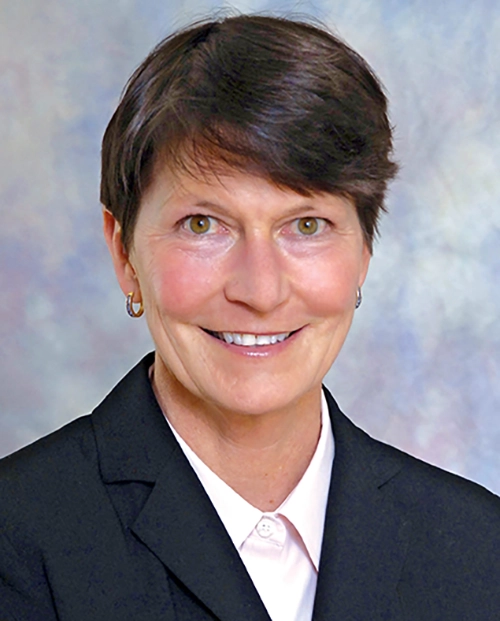
Klamar, for example, exemplifies elements of the Ambassador type, but recognizes aspects of the Monarch, General and Governor in her decisions about stepping down.
Klamar, a physician and longtime board member, became CEO of the business in 2000, brought in to replace an outside CEO who had succeeded her father. Her family company was eager to benefit from her medical training and ability to promote family values and culture. Taking over after her father’s leadership was no easy task, but the decision to step down might have been even more difficult.
Being a leader who’s proactive about your own succession, like Klamar, requires taking into account the kind of leader you are and the challenges that style might pose.
Moreover, governance alone can’t resolve succession challenges. Leaders are notorious for suggesting “mandatory” retirement ages don’t apply to them. As a result, leaders must be largely responsible for their own succession.
“You have the responsibility to say, ‘I’m not the leader I need to be for this stage of the organization,’” Klamar says. “’This course is for horses and this horse is tired.'”
Proactive Succession at Midmark
Klamar recognized the question of her own departure would arise someday, and likely be tricky. “How are you going to fire your family member, especially if they’ve been in the role a long time or are a large shareholder?” Klamar, the business’s largest shareholder, says. “It can put the board and family in a very difficult position.”
Klamar drove major success for Midmark in her role as CEO, growing the business 400% by early in the second decade of her tenure. But then things changed. Sales were flat for several years, and she felt less engaged: “I was exhausted, on the road all the time, and knew I wasn’t inspiring and adding value the way a leader should.”
Reflecting on that feeling, Klamar contacted a trusted mentor, who told her; “You want to go out at the top of your game. It’s the right thing for your organization.” Klamar took that advice and her own instincts to heart, and in 2015 informed Midmark’s board she was ready to step down. She would stay until a successor was ready. According to Klamar, this was the right decision, but not an easy one. It required some deep thinking about her present and future and overcoming some Monarch desires to stay on regardless of circumstances.
While Klamar had some successors in mind, none were ready at that time. Due to some changes in his own circumstances, the then-board chair expressed some interest in the role. He was a private equity executive in the process of selling his own company and could take Midmark to the next level of growth. The chair agreed to take on the role, with one condition: Klamar become new board chair.
So, it was in 2016 that Klamar and the chair switched roles. Not surprisingly, elements of the transition were challenging, as she notes: “The new CEO pulled back on some strategies I’d worked hard on, like our international growth. It was like he was calling my baby ugly, but I knew I had to give him the reins.” Again, this was a decision that took effort in order to avoid the General’s tendency to step back in when decisions did not align with how she felt things should be done.
Klamar, with the support of her largely independent board of directors, kept busy modifying Midmark’s corporate-tax structure, a buyout of more than half the shareholders and systematizing family governance. This adoption of new missions helped to address any “Governor” concerns about Klamar’s transition out of the CEO role by finding new ways for her to contribute without leaving the organization and the family for new opportunities.
The new leadership configuration served the organization very well, as Klamar’s successor drove large revenue growth — 75% in three to four years. In 2021, Midmark had another smooth transition to a new CEO, a decades-long internal executive who again represented a different, well-aligned skill set for the business’s next phase. In 2024, the family added Klamar’s sister and brother to the board, to boost the family’s voice and prepare for her own potential succession as chair.
Indeed, Klamar began thinking about her departure from chair in 2024, due in part to health challenges — her own (she’d broken a hip without realizing it!) and her husband’s. Rather than keep that reflection to herself, she shared her thoughts with the CEO and lead independent director, who separately arrived at the same candidate that she had come up with to replace her. However, they both agreed Klamar should stay on, in part to help her siblings settle into their board roles. More importantly, they felt that what she had to offer was vital to the organization at this time.
“I serve at the pleasure of the board and shareholders,” Klamar says. This attitude clearly demonstrates an “Ambassador” approach to succession. “I can go whenever they think it’s time. We have the right board for right now, but need to recruit for the future, especially if the business grows even larger and more complex.”
Tips for Your Proactive Succession
Recognizing your leadership style will help you take a proactive approach to your succession. The tips below apply to any of the departure types.
Know when it’s time. This can be the biggest blind spot for anyone, not just Monarchs and Generals. Ego can play a role for even the humblest leader. It is also easy just to get caught up in your day-to-day. Klamar, as both CEO and now as chair, recognized when she no longer felt at the top of her game and took action. Being honest with yourself about ability, energy and timing will benefit you, the family and the organization.
Be — or find — the right leader for the right time. Organizations and their contexts evolve, and so should leadership. Klamar was a strong fit when she became CEO because of her medical background and family representation, but felt Midmark’s next phase of growth required a much more technology-savvy leader. “With technology, I knew what I knew but couldn’t see beyond that,” she says. “I didn’t want to be the oldest ‘emperor with no clothes.’” That’s when she approached her mentor.
Make it a conversation. Don’t keep thoughts about succession to yourself. Make it a true conversation with all relevant parties: the board, fellow leaders, family, mentors and others. You’ll likely gain critical perspective — including that it may not be the right time to leave, as Klamar discovered. The ability to work together toward a comprehensive, proactive succession plan will serve all stakeholders.
Prepare, prepare, prepare. Preparation is everything when it comes to succession. That, of course, includes working with the board and others on successor candidates, but also preparing yourself for what’s to come. Consider both the reality of no longer holding the role, and having to watch someone else make decisions, including undoing some of yours. “That part was surprisingly emotional and difficult,” Klamar says.
Identify your “what’s next.” Think carefully, like a Governor would, about what will bring meaning after your departure, but also what might continue to benefit the organization like an Ambassador would. In Klamar’s case, it has been philanthropy, serving on boards of family health care businesses, mentoring young people and working with university-based family business programs. All of these activities will continue to benefit the business and family and provide fulfillment for Klamar beyond her role as chair.
Keep the door open. Succession is far from a one-time thing. Bringing yours up, even if it’s not the right time to go, opens that metaphorical door and makes it easier for others to discuss in the future. “We talk about it every year to make sure people feel comfortable bringing it up. If I don’t ask the question, others might not either,” Klamar says.
Create a succession culture. All of the advice here goes toward creating a true succession culture, one that promotes thinking about, talking about and acting on leadership transitions. Klamar’s proactive, Ambassador-like approach and promotion of graceful exits has helped the enterprise build exactly that kind of culture. “We’ve become much more thoughtful about succession over time,” she says.
Klamar’s parting advice sums up all the ideas here well: “The most important thing is to open the door for the previous generation to leave gracefully, for the current generation to enter effectively and to help the rising generation feel welcome to step in at the right time and realize their vision for the future of the enterprise.”