








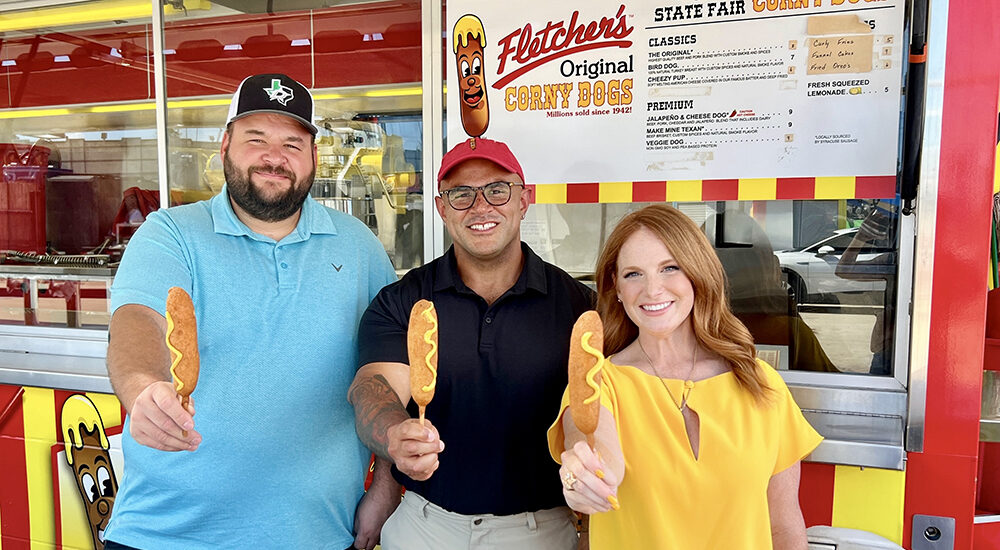
For more than 80 years, visitors to the State Fair of Texas have stopped by Fletcher’s Original Corny Dogs booths to grab food made on-site by this third-generation family business. Each fall, the company’s 200 seasonal employees sell about 550,000 of its “corny dogs,” as corn dogs are sometimes known in Texas, over the 24 days the fair operates.
Some of the ingredients in the corn dogs are sourced from family businesses, too.
“We use a mill in Shawnee, Okla., called Shawnee Milling, and it’s a family business. They produce our corny dog mix. And then we get our meat from [family-owned] Standard Meat, and they produce a few items to our specifications. And then a couple others are just from local distributors, but everything comes in fresh and it’s made fresh, made to order,” says Amber Fletcher, co-owner and a member of the third generation.
The corn dogs are available in several varieties including beef and pork, all-beef, turkey and veggie. The state fair accounts for 80% of the family’s revenue, with the remainder coming from catering and events under a separate LLC that employs about 12 to 20 people year-round. One member of the second generation and three members of the third generation co-own Fletcher’s through a trust, and a handful of other relatives also work for the company.
For much of its history, the state fair was the company’s mainstay. Occasional forays into other venues didn’t always work out. Now, the rising generation is finding sustainable ways to generate revenue when the fair isn’t in session.
From Onstage to on a Stick
The company was founded by two brothers, Neil and Carl Fletcher, who performed a vaudeville tent show at the State Fair of Texas in the 1930s. They were looking to retire from performing, and the fair offered them a chance to open a food booth.
They didn’t have experience as chefs, so they searched for inspiration. They saw a street vendor who was baking hot dogs in cornmeal into the shape of an ear of corn. The finished product appeared promising, but it was a time-consuming recipe. They decided to adapt that concept in a way that would be more practical to serve at the fair. “They were inspired to create a batter that they could fry and put it on its stick and just kind of expedite the cooking process,” Amber says.
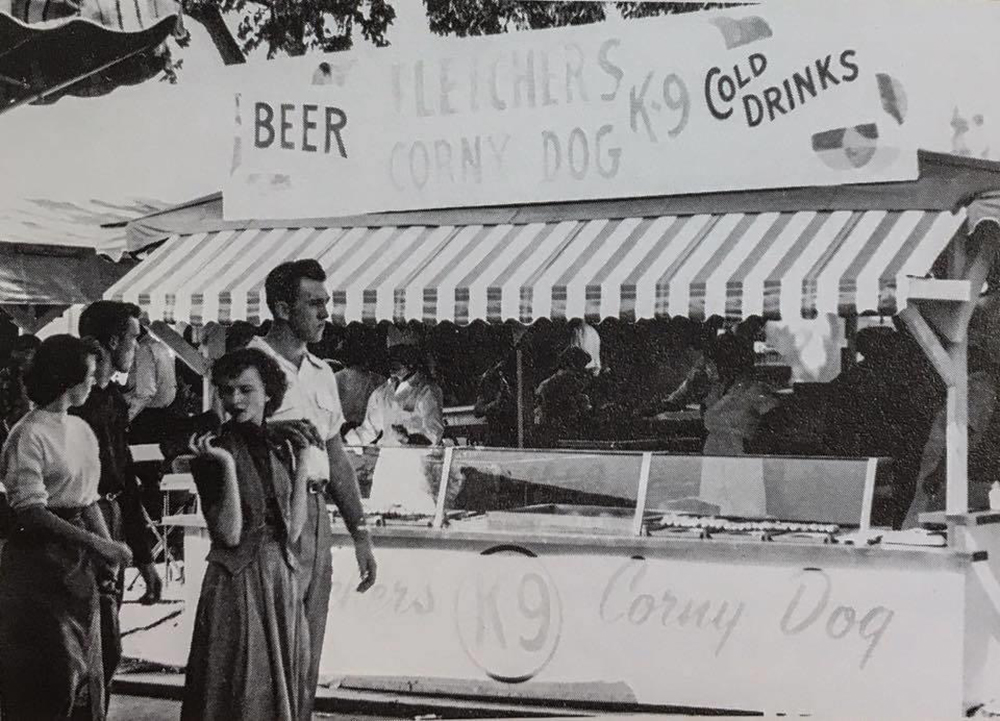
They spent a few years experimenting with the batter, then started selling the corn dogs at the fair in 1942 for 15 cents each. The idea of walking around a fair while eating fast food on a stick was unfamiliar at the time, and customers were initially hesitant. “At first, they had to give them away because no one knew what it was. So, they cut them up in bite-sized pieces and gave them to the fair-goers and they were a hit,” says G.G. Fletcher, second-generation manager and board member.
“That first year, the fair was 17 days. They did about $8,000, which I remember a few years ago looking up and the equivalent was about $120,000 today,” Amber says. Over the next few decades, the business grew, and they added more booths. When he wasn’t working at the fair, Neil applied his performing skills to radio and, later, to TV commercials. He was the public face of the company.
“I don’t think it was a big thing back then to consciously brand your product, but I think because of who he was and how he knew to communicate things with people, that he was indeed branding the Fletcher’s original state fair corn dogs,” G.G. says.
The company tried some new things now and then. For a short time, they sold corn dogs in local movie theaters. They briefly offered products in a grocery store. And in the 1960s, Neil opened diner for a few years. But Neil’s main focus was serving corn dogs at the state fair, alongside his ongoing acting and voiceover work. He told people that he didn’t have much ambition to scale the company further because he preferred to spend his free time playing golf and fishing.
Expanding, Then Pulling Back
Neil’s son, Neil “Skip” Jr., loved spending time at the fair and always planned to continue the family business. He first worked as a singer and airline pilot, but by the early 1980s, he was leading Fletcher’s Original Corny Dogs with his brother, Bill. G.G., who originally had a career as a flight attendant, started working as a cashier for the company in 1979 while dating Skip. After they married, she began working in the office and quickly took on more responsibilities, like hiring and ordering ingredients.
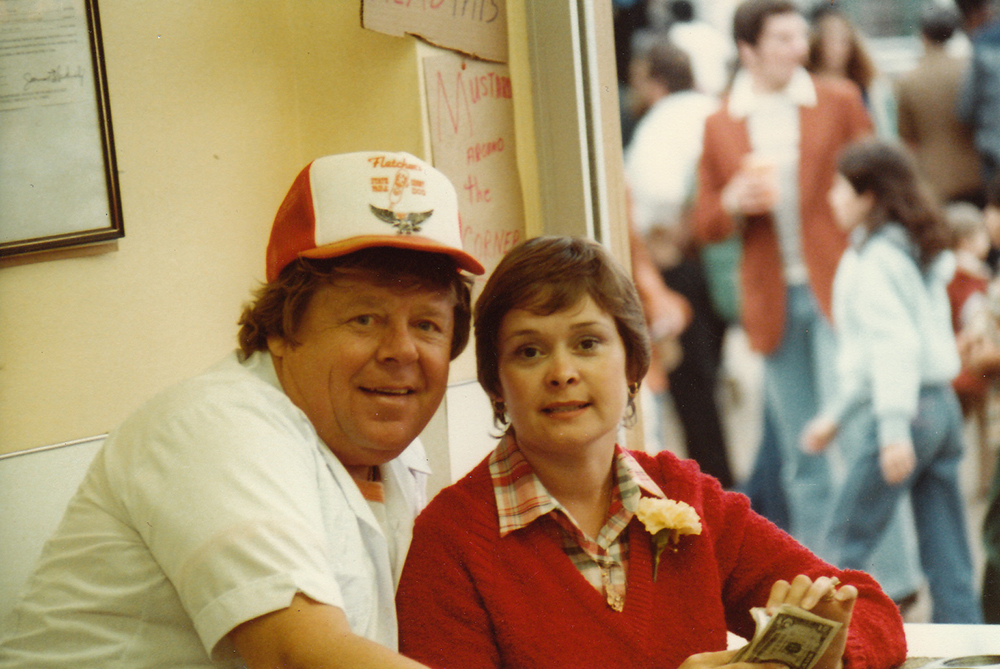
The family expanded the business significantly in the 1980s. They set up kiosks in malls and opened up brick-and-mortar locations. They also offered franchises. In total, the company grew to 52 year-round locations. Unfortunately, an economic downturn led to declining sales. The company was forced to close all the kiosks and drive-throughs and file for Chapter 11 bankruptcy. “It was really sad that we just didn’t have the business. No one was going out for dinner or lunch,” G.G. says.
Although the late 1980s and early 1990s were a difficult time, Amber notes the family learned the importance of sustainable growth and the bankruptcy paved the way for the brand’s later successes. “It doesn’t have to be the end for a company. It can just be kind of the next chapter,” she says.
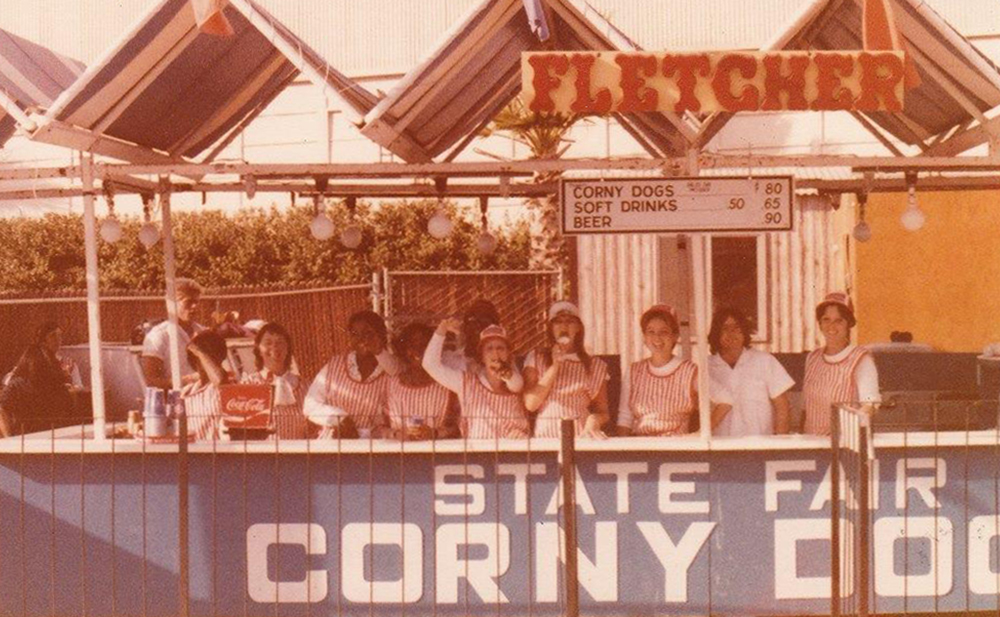
In the wake of that financial setback and some family tragedies, including the death of their son Rodney, Skip and G.G. focused on raising Amber and her brother Aaron. They sold corn dogs at a few festivals and events, but they concentrated their efforts on the state fair. “We just decided we were going to take some time. So, we didn’t grow the business a lot, but the business did expand at the fair because there were more and more people coming,” G.G. says.
Rising Leaders and New Flavors
At around age seven or eight, Amber and Aaron would come to the fair on the weekends and help out with simple tasks like sticking hot dogs. Amber remembers her father walking around the fair with them and playing games, or sometimes riding in a golf cart that he called his “corny dog chariot.” He also taught them about how the corn dogs were made. “Even at a young age, he was always instilling how the business works, how the product works. The two most important things in our company we learned as children were the quality of the product and the customer experience,” Amber says.
At age 10 or 11, they started serving customers at the counter, which they joked was good math practice. By her late teens, Amber had moved up to doing quality checks, where she would go to each stand, test the product and see if the managers needed anything. “We still do this today. We walk over the 200 acres of the fair and we just constantly are checking the quality of the operation, the quality of the product and being on site as much as we can in case there’s anything that could happen over those 24 days,” Amber says.
Their cousin William, who lived in Alaska, had a similar experience being introduced to the business as a child because his parents brought him to the State Fair of Texas each year.
Amber always wanted to work in the family business, and she joined the company full-time as soon as she graduated college. “It’s something that I’ve just been completely obsessed with since a child. So, I just thought, hoped and knew that this was what I was going to do with the rest of my life,” Amber says.
Since Skip’s death eight years ago, Amber, Aaron and William have taken on more responsibilities. For now, G.G. manages the business and is the sole remaining member of the board of directors. But the plan is for Aaron to become CEO and for Amber and William to be VPs. “I’m deferring more and more to them. I just will stay in this position until they feel real comfortable,” G.G. says.
Each of the rising-generation members has explored their interests and found areas where they can lead. Amber, for example, realized she enjoyed marketing and social media, so she started the company’s Instagram account. “There were some conflicts wanting to overlap, but everybody’s pretty settled in now to see what their strengths are. And then they each honor those strengths. They’ll go to each other for advice,” G.G. says.
For much of the 2000s and 2010s, the business continued as usual, with the exception of some new flavors the company introduced. They started selling a jalapeño and cheese corny dog in 2004 and a turkey dog in 2011. Amber came up with the idea for a veggie dog, which they began offering in 2015, and Aaron took the lead on the “cheezy pup,” which was added to the menu in 2018.
Corny Dogs, New Tricks
In 2019, the company acquired two food trailers and lined up several events and festivals to cater. But, of course, in early 2020, everything was canceled because of COVID-19. For the first month, the family sat at home watching news of the pandemic’s devastation. Then, an anonymous donor paid for them to bring their corn dogs to a local police station to boost morale. “From there, we were being sent to hospitals to feed first responders, fire stations, police departments. And then within a couple months of doing that, following CDC guidelines, we just started popping up all over Dallas-Fort Worth in parking lots at businesses,” Amber says.
The state fair was canceled that year, but Fletcher’s continued doing popups in a way that allowed for social distancing, at one point selling corn dogs from a field. They also partnered with a fast food chain that sold the corn dogs in its stores for eight weeks. “I think for a few moments, few seconds, few minutes, it was a time when people could kind of forget about everything that was going on and just get together and have something that reminded them of maybe their childhood or better times,” Amber says.
After the state fair resumed, they’ve continued finding new ways to reach customers. They opened concessions at home football games held by the University of Texas and the University of Oklahoma. They began working with Goldbelly and now ship corn dogs to all 50 states. And they run a food truck at a park on weekends. “Ever since COVID, every year has looked kind of different. And I do feel the big word during COVID was ‘pivot,’ and we said that word so much that we weren’t going to say it anymore. But I still feel we see a lot of that in our company and we try new things,” Amber says.
As the company grows, they try to set aside some personal family time, during which work isn’t up for discussion. It’s taken some practice to separate the two. “We actually took a trip two years ago and my mother kept texting with employees that were at an event. And I took her phone and I put it on silent and put it in her purse. I wanted her to enjoy being at the beach while she was actually there. But when you own a business, you care about every detail, every aspect, everything that’s happening. Our sticks that are on the corny dogs have our name on it. This product literally has our name on it, and that means a great deal of responsibility for us,” Amber says.
After the ups and downs of the first few generations, the Fletchers believe their company is just getting started. They’ll likely continue exploring new products and methods of selling them. “One thing that makes it so great is the nostalgia and tradition, but we also have to be open to change,” Amber says.
Still, she expects the State Fair of Texas will continue to be central to the company’s business model far into the future. “Every generation has done something different with the brand, but we always come back to the state fair.”