








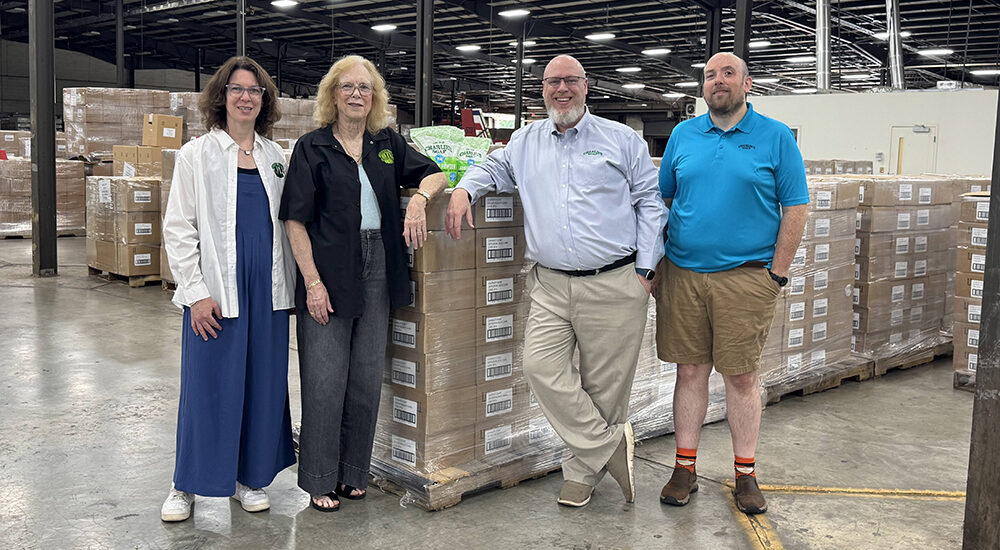
The history of Mayodan, N.C.-based Charlie’s Soap has been punctuated by lucky breaks. But, after realizing their reliance on happenstance wasn’t sustainable, the family behind the business is embracing a newfound structure.
Charlie’s Soap manufactures laundry detergents, surface cleaners and support items. Its eco-friendly, hypoallergenic products are free of perfumes and dyes and the company says it’s positioned between the natural space and the traditional space. “Clean is all we do,” says Taylor Sutherland, the company’s visionary and a member of the third generation.
The business has about 16 employees working across its 30,000 square foot manufacturing facility and 125,000 square foot distribution facility. Annual revenue is around $10 million. Seven family members are involved in operations, and the eight-person board includes two members from outside the family. A second-generation family member holds all the voting shares.
A Squeaky Clean Yarn
Charlie’s Soap got its start in 1976 as Sutherland Products, when Charlie Sutherland Sr. opened a business making yarn oils for textile mills. He hired his son, Charlie Sutherland Jr., to help. “[My father] was tasked with creating an oil for the knitting machines, so that the oil could be adhered to the yarn and it would run through the machines without any hesitation and without any breakages and things would just be working. The problem was that the oil would not come off of anything,” Taylor says.
Charlie Jr. and a few other employees reverse engineered the oil to make a cleansing agent that could remove it. The first attempt wasn’t very successful, but just as he was about to give up, he realized that he needed to change the dilution. That last step created a cleaner that worked very well — so well that it didn’t just clean the yarn but also the floors, machines and hands and clothes of the workers at the mills. Mill employees started bottling up the cleaner and bringing it home for personal use.
People called it Charlie’s Soap, and the company began selling it as an all-purpose cleaner in a local grocery store in addition to selling the oil and industrial cleanser to textile customers, mostly one particular local mill. In the mid-1980s, Charlie Jr. decided to buy out Sutherland’s other owners and focus solely on the soap business. Soon afterwards, however, the mill that had been his main customer shut down and was acquired by an international buyer.
It looked like the company was about to lose the vast majority of its sales, but Charlie Jr. was confident that the universe would provide for him. And it did. The new mill owner was shipping machines overseas but wanted them well-cleaned first, so it continued buying Charlie Jr.’s product. Demand from that customer was steady for about 15 years as the machines were gradually prepared for shipping one at a time.
Although Charlie Jr. hadn’t planned what he would do at the end of that 15-year period, one of his employees had more foresight. She set aside about $200,000 in a separate account. As Taylor tells it, when the last of the machines was sold off and it looked like the money was gone, his father said, “Well, that’s the end of that.” The employee replied, “Yeah, it would be, except for the fact that I’ve been hiding it from you to keep you from spending it.”
Around the same time, Charlie Jr.’s father-in-law introduced him to a new customer in South Carolina, who wanted to buy the soap in bulk to use in white label laundry detergent for consumers. The new business replaced nearly all the lost sales from the mill.
‘Mutually Assured Destruction’
As children, Taylor and his siblings often hung out at the plant after school. They helped by preparing jugs or bottling the product. They also put some bottles in a cart and pulled it around the neighborhood, selling the soap door-to-door. Taylor and his brothers James (now the company’s operations lead) and Morgan (administration lead) pursued various academic and professional paths after high school, but they sometimes floundered. Soon, they each found their way back to Charlie’s Soap.
James came into the business first around 2002, sweeping floors and helping with plumbing, manufacturing and electrical work. One day, an international customer was visiting but Charlie Jr. and the man were struggling to communicate. James came into the room and acted as a mediator between the two of them, helping them to understand each other. After that, James handled international sales.
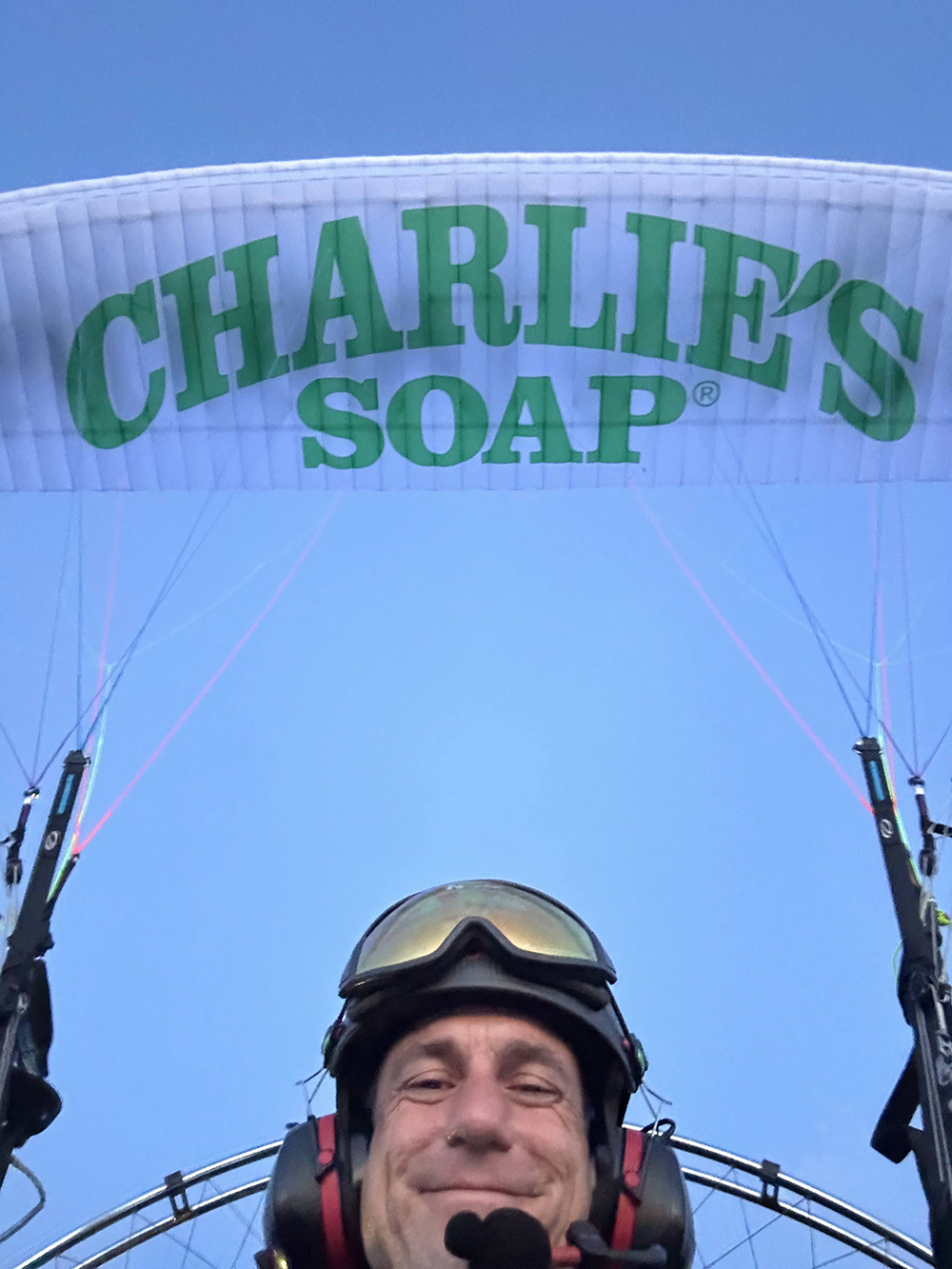
Charlie’s Soap had two products at the time, the all-purpose cleaner and a laundry liquid. It added a third at the request of a customer. “A gentleman asked us for a powder and gave us an ungodly expectation of sales. And so, dad came up with a powder really quickly. And the powder has ended up being our number one product,” James says. He took charge of making the laundry powder for the first few years.
Around this time, Charlie Jr. asked Taylor to come help out because laundry powder production was about to ramp up. Taylor said yes — he was already getting ready to quit his current job at the time and he was willing to work in the office of the family business. Morgan also came on board, working on label design and occasionally helping Taylor with the books. “First year, [we] took a loss equal to our salaries and we said, ‘That’s not a coincidence.’ And [we] decided to knuckle down and make some changes,” Morgan says.
They settled on areas of specialization, based on their strengths. For example, Morgan took over purchasing and payroll from Taylor. “At one point, he went on vacation for three weeks and I had to cover for him. And when he got back [I] said, ‘We are not doing it this way anymore. How about you deal with the money coming in and I’ll deal with the money going out?’” Morgan recalls.
Morgan also led production scheduling, while Taylor was responsible for domestic sales and accounts receivable. James continued to work on production and international sales, and he began handling costing, too. “We all had an understanding of mutually assured destruction. If James didn’t make anything, then I couldn’t sell it. If I didn’t sell it, Morgan didn’t pay us. If Morgan didn’t pay us, then all hell would break loose. So, everybody had their role, and we stuck to it. And fights always broke out, but we all knew we would rather do this than anything else,” Taylor says.
They also came to an agreement on compensation. “We set up a deal that me and the two brothers would always get paid the same amount regardless of what happened. We are on equal footing,” Morgan says.
The next year, they generated a profit of $200. “It was the best tasting case of beer we ever had,” Taylor jokes.
Growing By Word of Mouth… and By Accident
Charlie’s Soap eventually entered the ecommerce realm. It set up a website and began selling on Amazon. Then, national retailers like Whole Foods picked up its products. Meanwhile, the brand benefited from enthusiastic fans who told other people about their favorite detergent or cleaner.
The company’s lucky streak continued after a mishap that might have derailed its ecommerce sales instead opened a new revenue stream. At one point, Charlie’s Soap tried using a new raw material but customers began to complain that the laundry liquid had a bad smell. “It would still work, but it stunk to high heaven in the process and we almost got in trouble with Amazon for defective products,” Taylor says.
After troubleshooting the manufacturing process, they found the culprit and tightened the specs so the problem wouldn’t happen again. But they were left with a warehouse full of product that couldn’t be sold to consumers. The product was foul-smelling but still functional, so the company donated it to the local government for use in cleaning things like vehicles and street signs. A while later, someone from the public works department called and asked if it would be OK to pour the liquid cleaner down the sewer. He explained they had been receiving complaints about a bad odor coming from the sewer, and they wanted to see if the cleaner could solve the problem. Charlie’s Soap’s testing suggested that the product wouldn’t harm any of the beneficial bacteria in the sewer, so the municipality poured it in and successfully broke down the grease that was causing the issue. The odor went away, and the complaints stopped. Today, Charlie’s Soap works with two cities on similar issues, and two more are currently in a trial period.
Structure, But No Trust Falls
In the late 2000s, Charlie’s Soap set up its current board. “We brought in a consultant to help us get to that next level of things because dad was trying to get out of the business and trying to get it into our hands while he was still around instead of having to go through that after the fact,” Morgan says.
The brothers felt the consultant was heavy-handed, however, and they soon parted ways with him. Charlie Jr. stepped back from his leadership role, although he continued coming into the office every day until six months before his passing in 2021 from a terminal illness. While his death was devastating to his children, the leadership transition was smooth on a professional level. Charlie Jr. had always been more interested in the chemistry side of the company than in scaling up, which he mostly left to serendipity.
“Dad did what he called ‘great business’ and dad’s great business motto was, ‘If it didn’t fall in your lap, then it’s not worth pursuing.’ And he was very successful with that. Everything that fell in his lap, he went after with everything he had, and it was ordained by the Lord that he was supposed to be doing this because it wasn’t even his idea,” James says.
But as the company grew larger, it became clear that it needed to institute more professional practices. Charlie Jr.’s philosophy had worked well for him personally, but the company had outgrown it and was getting bogged down in conflicts between family members. “It can’t be just from the whim of the universe that we go in this direction or that direction with all of our energy. Otherwise, we will be split into a thousand different ways,” James says.
In the end, their sister, Jane Sutherland Whitehurst, proposed working with a new consultant. “My sister would come in as chairman of the board and would do things that we would not necessarily agree with, but she wasn’t directly related to the company other than to chair our board meetings. So, no real power, but she would wield that no power like an iron fist,” Taylor says.
Jane recommended they adopt the Entrepreneurial Operating System, or EOS. Taylor was skeptical, assuming it would involve gimmicky team-building exercises like trust falls. But he agreed to try it out. EOS provided a platform for organizing meetings and helped Charlie’s Soap establish an accountability chart rather than a conventional business hierarchy. It showed the Sutherlands they could each have a say and then move forward with a decision, rather than being derailed by disagreements. Best of all, it didn’t dictate the content of their discussions or force them to choose one path over another.
At the end of the first three months, Taylor thought, “This is still very alien to us, but the structure is something that we desperately needed and it’s structure without being overbearing. And there are no trust falls required.” They decided to continue with EOS, and Jane joined the company full-time to work on implementing it. They’re now busy articulating and codifying their processes.
“We grew very, very organically over the last 40 years and there was lots of, ‘Why do you do this?’ ‘Because this is how we do this.’ Well, let’s back up to first principles and see why we are doing the things that we are doing so that they make more sense to the next person,” Morgan says.
The documentation should be helpful when employees take time off, as whoever is substituting for them can read what they need to do and step seamlessly into their role for a short time. It’s also important for the company’s long-term prospects. Some members of the family’s fourth generation are still very young, while others are grown but are pursuing other careers and aren’t interested in working at Charlie’s Soap. There might be a gap in the future during which the company will need leadership from outside the family. “We should be able to hire an actual team of managers and step ourselves out of day-to-day into an ownership role solely. We’re not there yet. That is the goal, and hopefully we’ll do that within 10 years, if not five,” Taylor says.
Until then, though, the siblings are all about helping the world clean. “Everybody’s got their way to give back to further the universe. Ours just happens to be soap, so we’re going to maximize that. And that’s how we pray, that’s how we praise, that’s how we contribute,” Taylor says.