








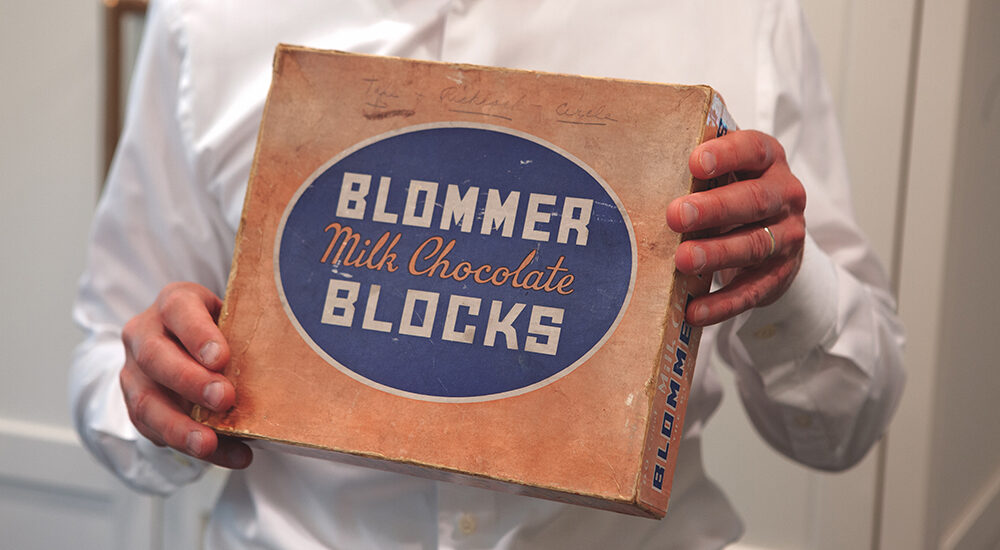
You’d be hard-pressed to invent a hypothetical case study that better encapsulates all the challenges and triumphs of running a multigenerational family business than the true story of Blommer Chocolate Company.
The company was founded in 1939 in Chicago by Henry Blommer and his two brothers, Bern and Al. Originally one of a dozen regional ingredient chocolate companies, it eventually became the largest cocoa bean processor and ingredient chocolate manufacturer in North America, with a growing presence in China. The company supplies ingredient chocolate to major brands — including Hershey, Mars, Nestle, Mondelez and Lindt — as well as many smaller firms.
In this interview, Blommer Chocolate’s former third-generation president and CEO, Peter Blommer, discusses the evolution of the company, including how it narrowly avoided a takeover by a massive family-owned multinational food corporation in the mid-1990s. That episode inspired in the Blommers a deep commitment to managing their family dynamic in the business and set the stage for more than two decades of significant expansion before they ultimately decided to sell the company in 2019 — this time on their own terms.
FB: Blommer Chocolate is a wonderful family business success story, but that story was almost cut short as you entered the business. Tell me about that pivotal moment in the company’s history.
PB: I joined the business in 1991 and, at that point, my father and uncle had expanded manufacturing to California, which is where I grew up, and Pennsylvania, which is where I now live. And so, they had created a great growth platform. At the time I was coming in, they also were beginning discussions to buy out another branch of the family who owned 50% of the voting shares. So, I thought, What a great time to come into the business. Little did I know, as we entered into the negotiations with this other branch to buy their shares, we would learn that there was tremendous animosity that had grown through the years between that branch and my grandfather’s branch.

In fact, that culminated in 1992 — while these negotiations were continuing — when my grandfather died at 89. On the eve of his funeral, we were gathered at my grandparents’ house in Milwaukee, right on Lake Michigan, and we received a call from the vice chairman of Cargill. He told us that they had purchased the cousins’ shares and they wanted to meet. They were now our partner. That was quite a shock.
Obviously, Cargill didn’t mean for that to happen with that timing — with the burying of our grandfather, the founder — but that certainly amped up the emotional aspect of this. And so, it was a real shock and it set up a two-year fight for control of the business.
FB: That’s a harrowing moment followed by a harrowing two years. But the resolution of this story shows what’s so unique about family businesses. In 1994, you purchased those shares from Cargill and regained full control of Blommer Chocolate. How did you achieve that after this two-year fight?
PB: I think it was a bit of luck, but it also was a little bit of common sense in the end. I have to give a lot of credit to my father Hank, my Uncle Joe and my Uncle Peter, who sat on the board of Blommer Chocolate. They just had tremendous resolve to fight for the business. They didn’t care how big Cargill was. It’s interesting because our story played out in the local Chicago newspapers and it seemed like weekly they’d have a panel of “experts” weighing in on the situation, repeating that our family had no chance of winning this battle against such a big company and that we should just sell the remaining shares.
But my father and uncles thought otherwise and they also polled all of our non-active shareholders, asking, “What do you want to do? Do you want to cash in or do you want to fight?” Every single shareholder said, “We want to fight.” The business meant so much to everyone and the growth prospects seemed bright, so that’s what we did. We engaged the best lawyers and investment bankers and spent a lot of money on that path, none of which really proved successful in court. But it was ultimately my Uncle Peter having a conversation with my father Hank and Uncle Joe where they said, “Well, why don’t we just write a letter to the Cargill board members — the Cargill and MacMillan family members?” It sounds so common sense, right? Why not just talk to them? That’s a very Midwest thing to do.
And so, you had two Midwest families with wonderful family business legacies talking about the situation. As it turned out, the largest Cargill family shareholder was passionate about family businesses and very upset to hear that his family business was in the midst of a hostile takeover of another family business. He immediately ordered the professional managers who were leading Cargill at the time to sell the shares back to our family.
So, again, maybe it was a little luck, but it was also some common sense: Before you just bring in the army of experts, why not reach out and have a conversation? That struck me early in my career. That was one of my biggest lessons early on.
FB: What other lessons did you and your family take away from this experience?
PB: In some ways, we’re really fortunate that this occurred because it really was an inflection point for our family in the business. There’s that saying that you don’t truly appreciate something until it’s gone. Well, Blommer was almost gone and I can tell you that the two-year battle instilled a strong appreciation for the family business and our family legacy in the business.
I recall thinking that we almost became another family business statistic. There are so many stories like that, but we were given a second chance and we were determined not to squander it. As we thought about it, it became very clear that, as I mentioned before, animosity had built up over the years between the branches that was not fully understood at the time and was very likely preventable. So, I’d say the main takeaway was that, from that moment on, we needed to invest in our family dynamic to prevent something like this from happening again.
FB: So, in 1996, you hire a family business advisor. What changes were implemented and how did that impact the family and the business?
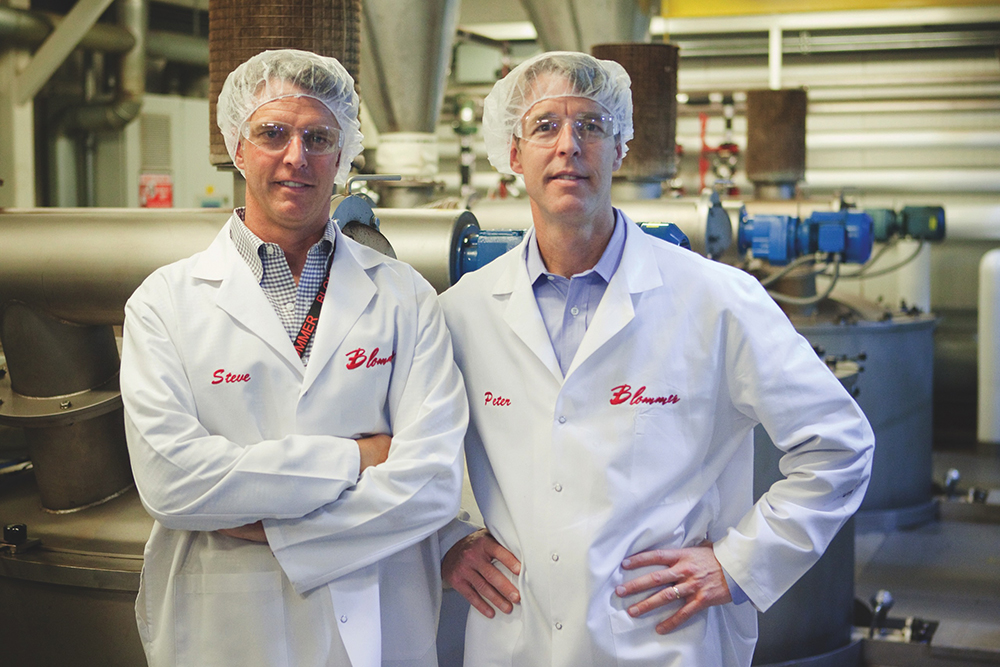
PB: After regaining control, more members of the third generation entered the business. A sister, one of my brothers, a cousin, each one bringing different skill sets, but an equal passion for the business. So, as we got into the business, operating out of different plant sites, there was a lack of coordination and communication across the organization, which caused confusion. It was all well-meaning, but we were all running with the ball. I called it “jump ball” management. So eventually, with the lessons of Cargill fresh in our minds, the G3 gathered to discuss how we needed to organize ourselves and invest in our family dynamic to really support the growth of the business. We were very fortunate to receive full support from my father and uncle and they agreed with our recommendation to bring in an outside family business advisor to help us. I’d say that was, by far, the best decision that we made.
FB: You’ve talked about the concept of patient capital in a family business. Why was that so important as you sought to implement these changes?
PB: We nearly lost the company because there were some shareholders who felt trapped. One was in the business, one was not, but they weren’t patient or happy shareholders and they wanted an exit. So, it had come to a head. The first thing our advisor did was say, “Let’s understand how the rest of the shareholders feel. Let’s interview them and understand how they view their ownership.” We were very fortunate that everyone coalesced around fighting for the business and that helped create some unity. Really, all of the shareholders viewed their ownership as something they were proud of, but didn’t really look to as a source of income. There wasn’t any income — there was no dividend paid. We were just very patient in owning those shares. No one was raising their hand to say, “Hey, I want to exit, too.”
To have patient capital is a real asset as a family because it’s a foundation to build upon. But to maintain that patient capital, you need to have informed shareholders. And so, we started shareholder meetings to educate shareholders on the business, on its financial performance, on our growth strategy, to get them invested in it and understand where the company was going and how we were growing its value.
Probably the most important thing we embraced was the difference between ownership and management. That was really powerful, but also really hard. As owners, we wear one hat and have certain rights that must be respected through proper governance. As management, we have a responsibility to the business to place family members in appropriate roles based on their experience and skill set. There shouldn’t be entitlement to a role in management based on your ownership. That separation was really important.
We also instituted a family involvement policy and talked about some of the criteria for joining the business. That was to keep at bay some of the poisons that affect families in business: entitlement and obligation. I’ve seen it in so many family businesses, where entitled family members can harm the business or even themselves long-term if they’re in roles that aren’t appropriate to their skill sets.
FB: The other step you took was to create a mechanism for liquidity through a stock redemption plan. How did that help the family dynamic?
PB: As the company got bigger and more successful, my uncle, who was not involved in the business but was on the board, at one point said, “OK, I’m age 70-something — no rush, but it’s probably an appropriate time to start looking at liquidity for me.” So, we thought, OK, we need to create liquidity for him but let’s, at the same time, create a pool that also allows for some limited liquidity for other shareholders. We prioritized non-actives. And it was to provide help and support for someone whose kids were going off to college or someone who was looking to buy a house. We created a stock redemption plan. We did not create a dividend. We never had a dividend policy. And that was really because we were putting all of our cash flow back into growing the business and it was a pretty capital-intensive business — working capital and capital expenditure. We didn’t want an outflow going to shareholders, but we did want to provide shareholders with some limited liquidity for special situations. So, that’s what we did.
FB: Around this time, you also formed an advisory board. How did the outside experience of and advice from those board members help?
PB: We had reached a strategic inflection point. We had transitioned from G2 to G3 and we felt the need for some outside expertise — gray hairs to help us think through our strategy and, frankly, to inject a bit of accountability in family leadership. I just thought that was really important.
FB: G3 oversaw some really incredible growth. What was the transition from G2 to G3 like?
PB: During my 30 years, we grew the business from about $100 million in revenue when we bought the shares back from Cargill to over $1 billion dollars when we ultimately sold the business. We became the largest cocoa bean processor and ingredient chocolate manufacturer in North America over that time.
I really have to credit my father and uncle for their support of the G3. First of all, they laid the foundation for the business, expanding it in North America as they did. So, it was a platform for growth for us. But they also gave us a lot of responsibility and pushed us. They were wonderful mentors and supported the work that the G3 was doing to harness our family dynamic in a positive way.
By the time the official transition took place around 2010 — and it took place rather suddenly — the G3 was really running the business day-to-day. For instance, starting in 2003, I became chief operating officer and was leading strategic planning, developing strategic partnerships and oversaw our commodity hedging and procurement activities. My siblings and cousins were either running plant P&Ls or running company-wide functions such as sales. We really grew into the business with great mentorship.
But sadly, the ultimate transition from G2 to G3 accelerated very suddenly with the death of my Uncle Joe in 2010 and the fairly sudden retirement of my father around the same time due to health issues. That time — 2010 — was a challenging one globally and economically.
We also, around that point, were seeing intensified competition from global players. So, we had grown to be the largest in North America, but we were far smaller than our global competitors. And we saw some of our global competitors developing global relationships with our North American multinational customers. And so, the competitive dynamic, the global nature of our business was really amping up.
FB: Throughout this conversation, we’ve been talking about inflection points. With G3 now in full control at this point, how did you adapt to your new roles and also to this really challenging global environment?
PB: We wanted to make sure that we weren’t insular and just trying to do the same thing that had gotten us to where we were at that point. We knew that we needed to up our game and think differently about our forward strategic path. And that’s where the advisory board came into play. We had some pretty smart people on our board who helped us with strategy and also pushed us on performance. The main focus was on our global footprint. We were actually number three in the world, given our size in North America, but we were still a far cry from the size and resourcing of our biggest competitors, who were very international. So, we sought to build out a bit more of a global footprint.
Initially, we looked at Mexico. We got very close to a deal there. I have to say it was, I think, the best decision not to enter Mexico at that time, given the circumstances of what was shaping up there. But we quickly turned our focus to China, which was very important to a number of our global multinational customers. They felt that they didn’t really have a well-developed supply chain supporting them in China and so they welcomed a company like Blommer to supply them there. By 2015, my cousin Rick led the effort to first build an R&D center and really learn the marketplace. By 2017, we had built a manufacturing facility just outside of Shanghai in an area called Jinshan.
FB: And during this time, you also were looking at joint venture opportunities to broaden the global footprint.
PB: It’s very, very capital-intensive to expand globally. And we were looking both forward in our supply chain to customers, but also backwards in our supply chain to the raw materials and processing at origin — where the cocoa beans were grown, primarily in West Africa.
We looked at a number of joint venture opportunities and there were a lot of companies that were very interested in partnering with us, given our size and scale in North America. But joint ventures are very tricky, in my experience. There has to be real alignment. And we did not find many joint ventures that made sense to us long-term.
FB: And even during this very challenging time and amid this increased competition, you did continue to grow and increase profitability.
PB: We did. As I mentioned, we ultimately grew to $1 billion dollars in revenue. We built out that site in China and expanded our plants in North America. We also drove a big push towards more value-added products. We became the largest manufacturer of sugar-free chocolate. We also made protein-enhanced coatings for the energy and nutritional bar market, as well as high-end chocolates for the rapidly growing premium chocolate segments. So, there was a major push that was quite successful and which enhanced profitability.
FB: And so, in 2019, you sell the business to Fuji Oil Holdings of Japan. After the Cargill experience, I have to imagine this was not an easy decision to make as the third generation. What was the thought process?
PB: It was a tough one. There were a lot of sleepless nights or nights where I’d wake up in a cold sweat wondering, What were we doing? What was I doing? What would my grandfather, father and uncle do? And there was a lot of emotion around the ultimate decision to go through with the sale process.

But we had to keep coming back to the facts and what we were really trying to do was ensure the strength of the business for our employees and for our customers. We also felt a tremendous sense of responsibility to ensure that we were being good stewards of, and enhancing and protecting, our family’s net worth. We had entered a different era of global competition and the risk capital required to continue to grow and compete was ramped up. We knew we could continue to grow, but it would take more risk capital investing in other parts of the world. It was also at a time when family shareholders were into their late 50s, early 60s, and we didn’t really have a mechanism for more significant liquidity should that be desired. The company couldn’t really have a major liquidity event at a good valuation for shareholders and continue to invest globally in the business.
Around this time, Fuji, who we ultimately sold to, had approached us. We thought at that time maybe there was an interesting joint venture opportunity in Asian markets. They made clear that they were very interested in acquiring us. And, ultimately, with a lot of thought and a lot of angst, but really thinking it through logically, we decided that the best path to become truly global for the benefit of the business, our employees and our customers, was to go through a sale process. And that would also maximize the value for shareholders.
FB: As you look back on your career at Blommer, what are you most proud of?
PB: I’ve had some time to reflect. It’s been a couple of years since I stepped down from the CEO role. First of all, I just feel so lucky that not only did I have a family business that I eventually was able to join, but that it was in the chocolate business, which is so unique. Everyone has a story about their favorite candy, their favorite chocolate. It usually involves some childhood memory. It’s just a great industry full of wonderful people.
But when I reflect, it’s not just about what we built at Blommer, but how we did it. I’m very proud of the way we stuck to our core values of integrity, care for the customer, commitment to our employees and the community, and a strong sense of ownership. We didn’t just say it, we lived it. In fact, we lived that before we actually had written those core values down. Those core values were passed down by the stories you heard and the actions you observed. And our family was known for that.
FB: You stepped down from the president and CEO role at Blommer Chocolate in July 2022 and continued as a board member and strategic advisor as vice chairman until December 2023. What has your family been doing to keep the Blommer legacy alive since selling the business?
PB: After the sale of the company, my family wanted to honor my grandfather Henry, the founder, in a way that would be meaningful and that would continue our family legacy. We ultimately decided to make a gift to Georgetown University, where our grandfather and other family members attended, in support of their Business of Sustainability Initiative in the McDonough School of Business. Sustainability has been a major focus for our company and our industry for decades, particularly improving the livelihoods of cocoa farming communities. I realized early on the important and powerful role that businesses play in addressing the major social and environmental challenges we face today. And I recognized that those companies who incorporate sustainability into their strategy can create competitive advantages that enhance their business — doing well by doing good.
Additionally, as a family, we continue to invest in programs that support cocoa farming communities, such as building wells for clean drinking water and bringing solar power to remote villages. We are introducing the next generation to philanthropy in a way that connects them to our family’s legacy in the chocolate business. Beyond sustainability, I have been encouraging an entrepreneurial mindset with my three children. Each of them heard the stories of Henry’s entrepreneurial adventures that were carried on by the next two generations. I believe this has shaped their own entrepreneurial interest to create their own businesses. And they are well on their way. Separately, we have created a small fund to invest in interesting business opportunities, which provides another avenue to learn and earn a return.