








The typical chief executive officer of a family business is a family member and earns $500,000 in total compensation, according to a new survey from Family Business Magazine and Compensation Advisory Partners (CAP), an independent executive compensation consulting firm. If the CEO receives long-term incentives, such as phantom stock or multiyear cash incentives, as is the case for 30% of survey respondents, total compensation jumps to $900,000 per year.
Family Business and CAP first launched the “Family Business Executive Compensation Survey” in 2020 to spotlight pay levels and practices at family businesses. The survey captures information that is not available in other published surveys. The fourth and most recent survey iteration was published in February 2026.
This exclusive study drew submissions from more than 275 family businesses representing a wide range of industries and revenue sizes.
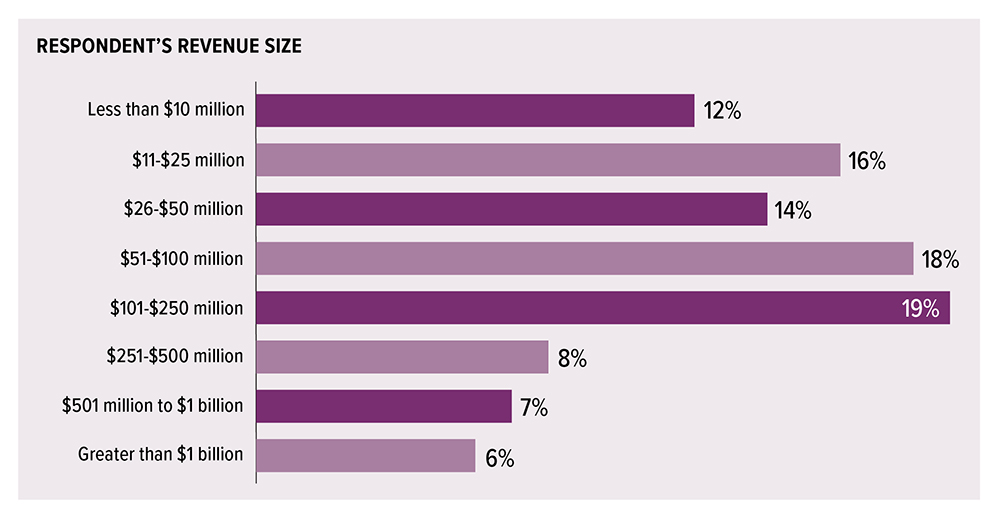
This year’s sample was the most robust in terms of quantity and quality of compensation data provided. Approximately one-third of respondents represent manufacturing companies, but many other industries are represented.
The survey asked respondents to provide compensation data for 10 common executive positions and to provide an overview of pay practices, such as salary increase budgets, compensation philosophy, bonus plan design and spending, and long-term incentive design. This article highlights some of the key findings from the 2025-2026 survey.
Compensation Levels
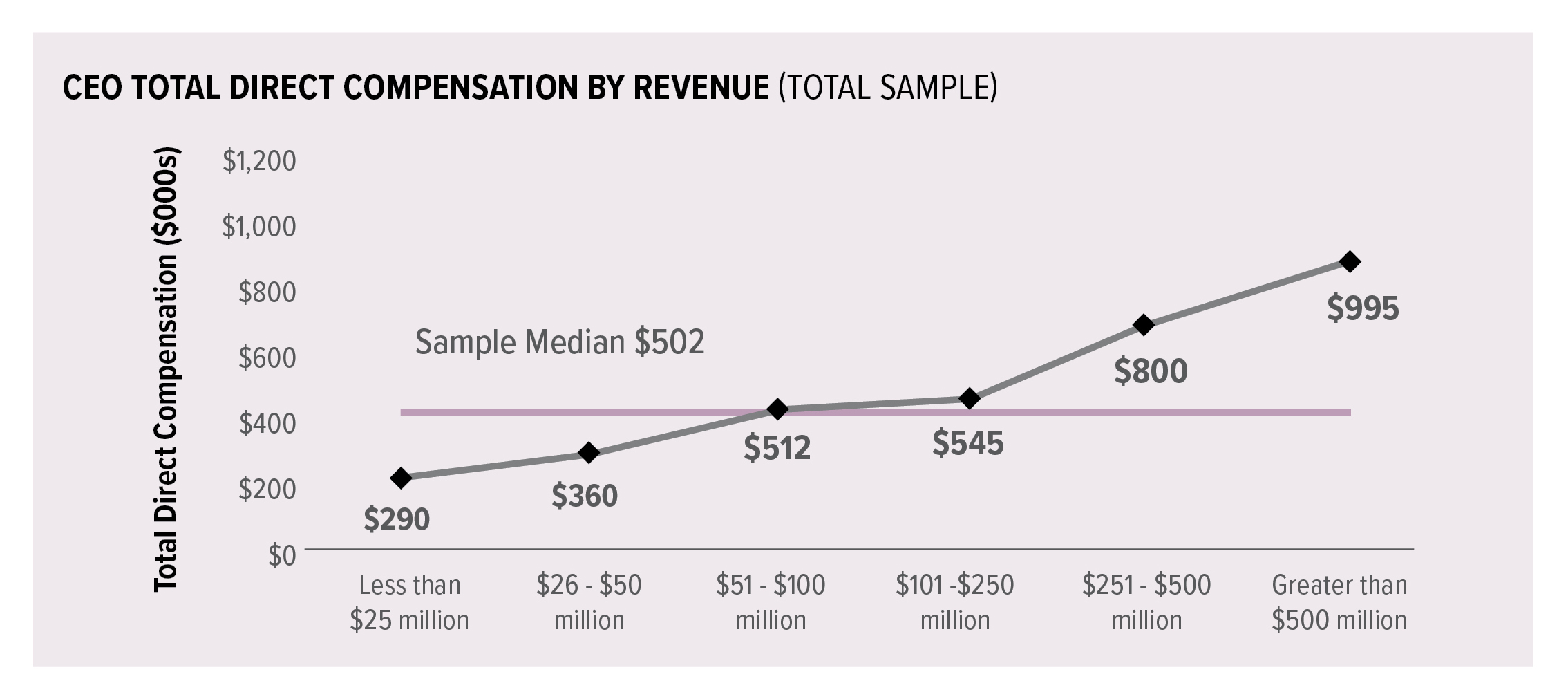
When establishing compensation levels, company size is an important consideration, as it affects organizational complexity and the responsibilities executives hold. This size-and-pay relationship holds true in family businesses, as the survey shows that total compensation levels rise with increasing revenue size. Total compensation, also called total direct compensation, includes base salary, bonuses or short-term incentives, and any long-term incentives. The following graph of CEO pay levels shows the relationship between total direct compensation (TDC) and company size.
Family and Non-Family Executives
The survey reports actual compensation levels for 10 positions common in family businesses: chief executive officer, president, chief operating officer, chief financial officer, chief legal officer, chief sales officer, chief information technology officer, chief human resource officer, business unit/sector head and family office head.
The survey asked respondents to indicate whether a position was held by a family member or not when providing compensation information. The two executive positions of CEO and president tend to be held by family members. In addition, family members tend to hold the head of family office role in businesses that include the role in the company roster, versus in a separate entity. In contrast, business unit heads and specialized functional roles — which are COO, CFO, CSO, CLO, chief HR officer and chief IT officer — tend to be held by non- family members.
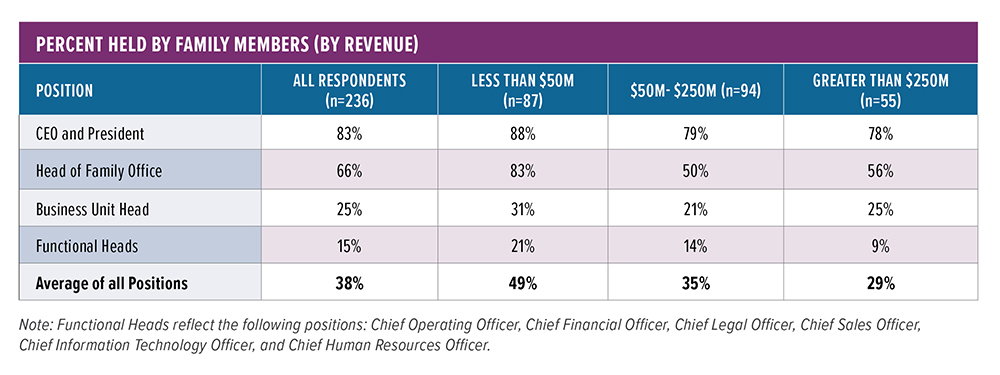
Smaller companies have greater family representation in the executive ranks than larger companies. As companies grow, they hire talent from outside the family, particularly to gain specialized expertise. One exception is the CEO position, which is predominantly held by a family member across all revenue ranges.
The survey found that most family businesses treat family executives and non-family executives similarly for compensation purposes, including for incentive purposes. In CAP’s experience, businesses prefer to include all executives in the same incentive plans to promote teamwork and unified pursuit of business objectives.
Salary Increase Budgets for 2026
Survey respondents indicated that base salary levels are budgeted to increase between 2.5% and 5%in 2026, with an average projected salary increase of 4%, down from 4.2% in 2025.
Approximately one in five companies plans to provide no salary increases to executives in 2026, a similar proportion to 2025. Most survey respondents are projecting the same executive salary budgets for both 2025 and 2026; however, 23% are projecting decreased salary budgets for 2026, while 13.5% are projecting increased budgets for 2026.
Compensation Philosophy
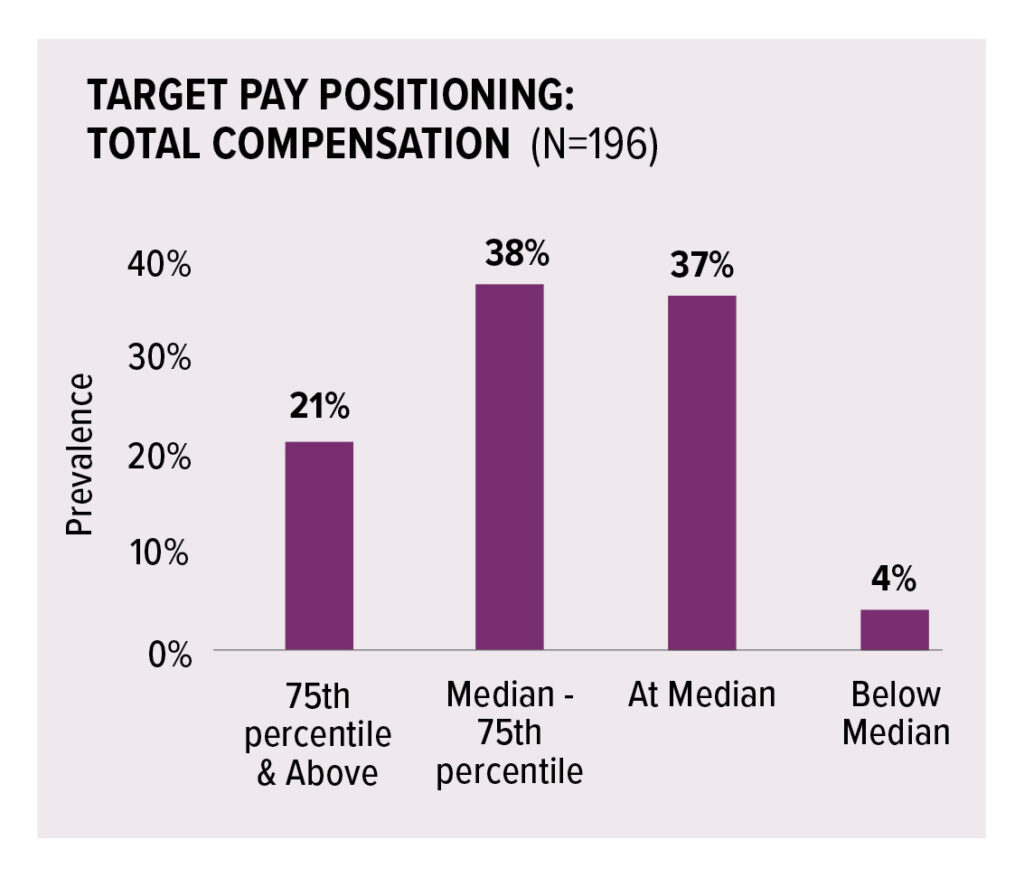
A compensation philosophy establishes where a company’s pay stands relative to the competitive market. The survey shows that close to 60% of family businesses target total compensation levels — which include base salary, bonuses or short-term incentives, and any long-term incentives — above the market median to attract and retain executives. In contrast, most publicly traded companies target market median for total compensation. The above-median pay positioning for family businesses is used to partially offset the fact that such businesses do not have publicly traded stock as a form of compensation. Based on CAP’s experience, family businesses typically view their talent market as including a mix of publicly traded and privately held companies. Targeting above-median total compensation helps family businesses attract and retain the executive talent needed to run the business.
Short- and Long-Term Incentives
Short- and long-term incentives are important tools for rewarding performance and focusing executives on the objectives of the business. Short-term incentives are designed to align with shareholders’ interests in the near-term, usually a year in duration, while long-term incentives focus on a three-to-five-year time horizon or beyond.
Short-Term Incentives
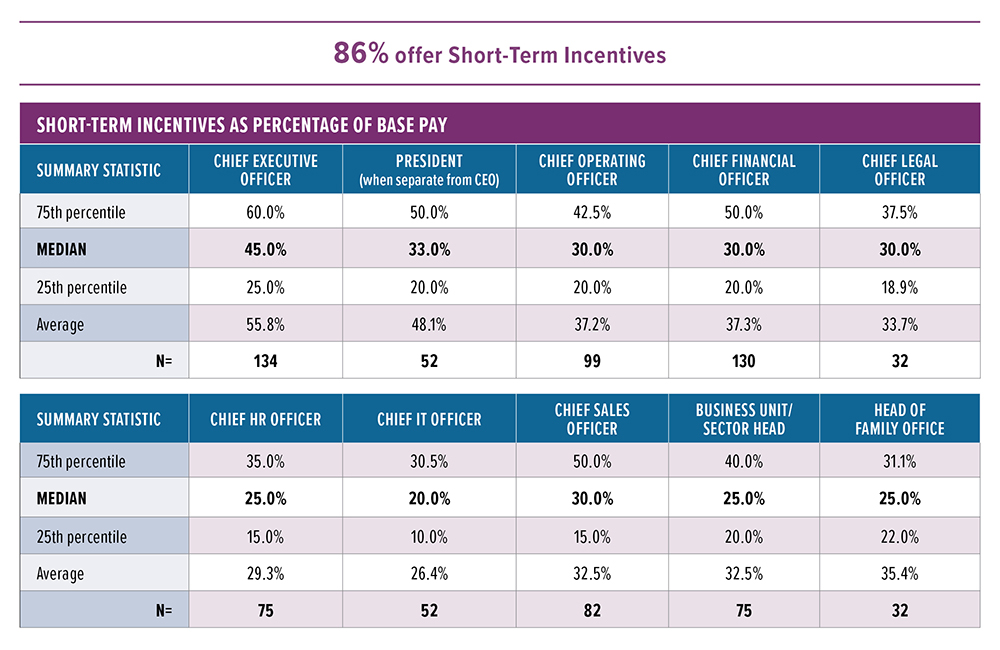
Of the survey respondents, 86% offer short-term incentives to executives. The median spending by family businesses on short-term incentives continues to be 10% of operating income at median, with 15% reported at the 75th percentile of the range. This is slightly higher than spending on short-term incentives at other privately held companies, indicating that family businesses focus on short-term incentives to motivate executive talent.
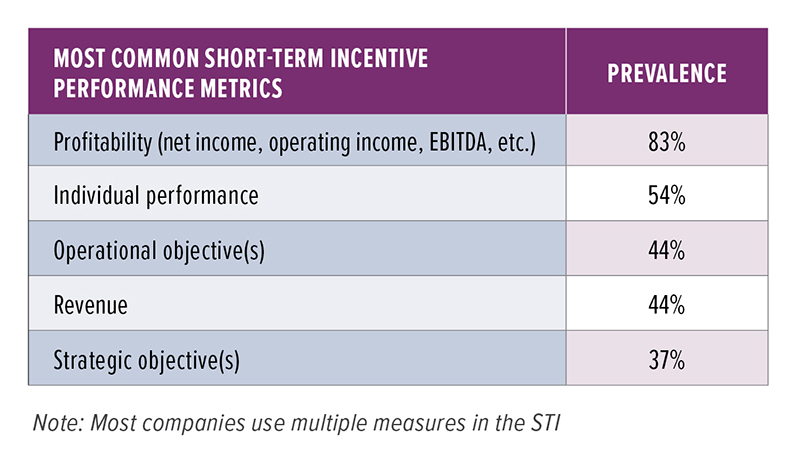
Most companies use more than one performance measure in their short-term incentive plans and mix quantitative and qualitative objectives for a holistic assessment of performance.
Long-Term Incentives
Less than half of all family businesses surveyed offer long-term incentives to executives. In contrast, long-term incentives are nearly universal at publicly traded companies and are used by more than half of privately held companies. Family businesses tend to use long-term incentives less than the broader market because of the complexity associated with design and implementation. Based on CAP’s experience, family businesses are becoming more interested in implementing long-term incentives to compete for top talent. Larger family businesses and those with numerous non-family executives are more likely to provide long-term incentives.
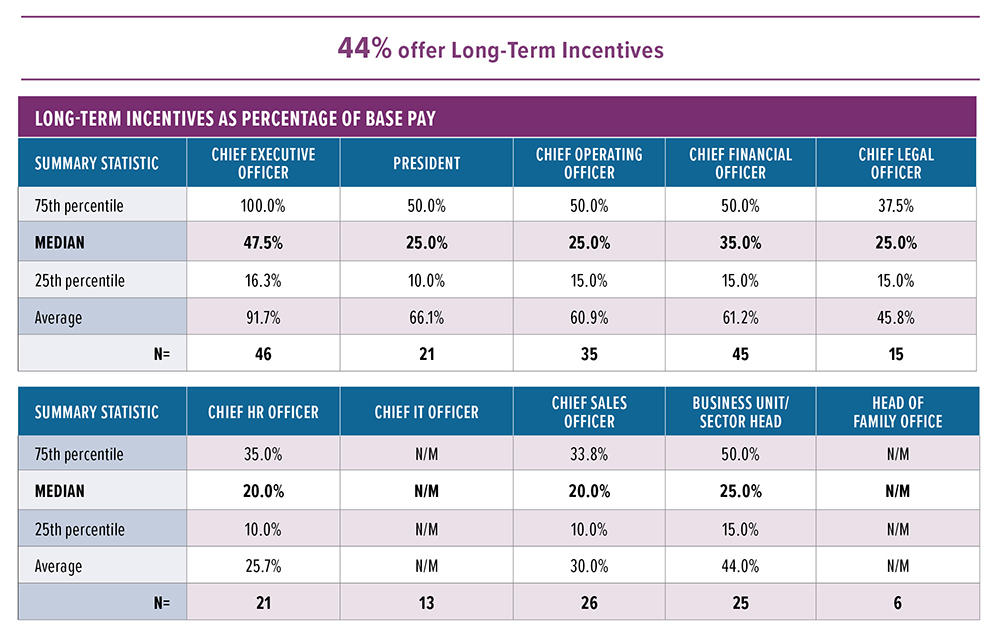
The most prevalent long-term incentive vehicles used by family businesses are non-qualified deferred compensation, phantom (or shadow) stock and multi-year cash performance plans. Real equity is not prevalent because family-owned companies are reluctant to share real ownership with non-family executives. Non-qualified deferred compensation plans, which allow employees to defer income and taxes to a future date, are often used in combination with other long-term incentives. Phantom stock is a cash vehicle that provides participants with payouts tied to the valuation of real company equity or to formulas designed to track equity value (e.g., EBITDA multiples). Multi-year cash plans are incentive plans tied to financial and strategic goals, with a typical performance period of three years.
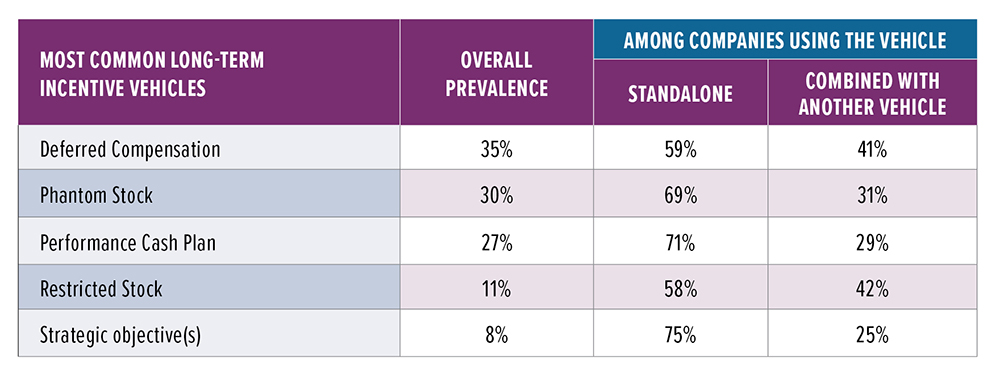
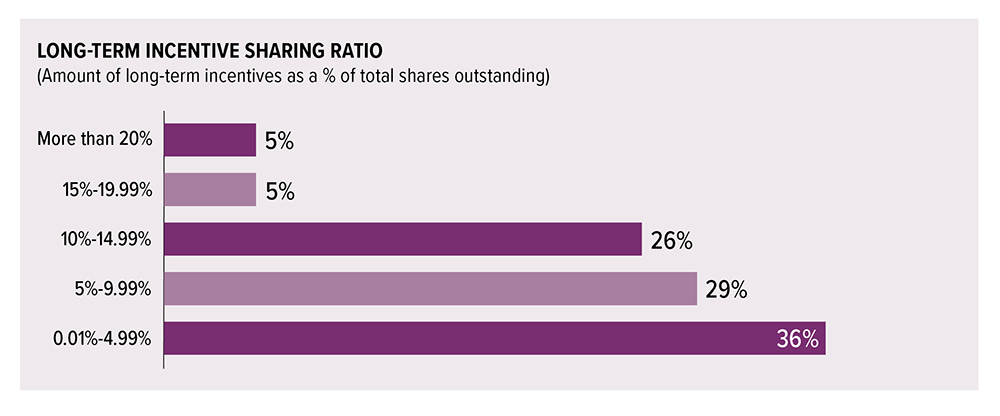
About 65% of survey respondents with stock-based long-term incentive plans (real and phantom) report award pools of 10 percent or less of total shares outstanding. Public companies often share more than 10 percent of total shares outstanding through equity awards.
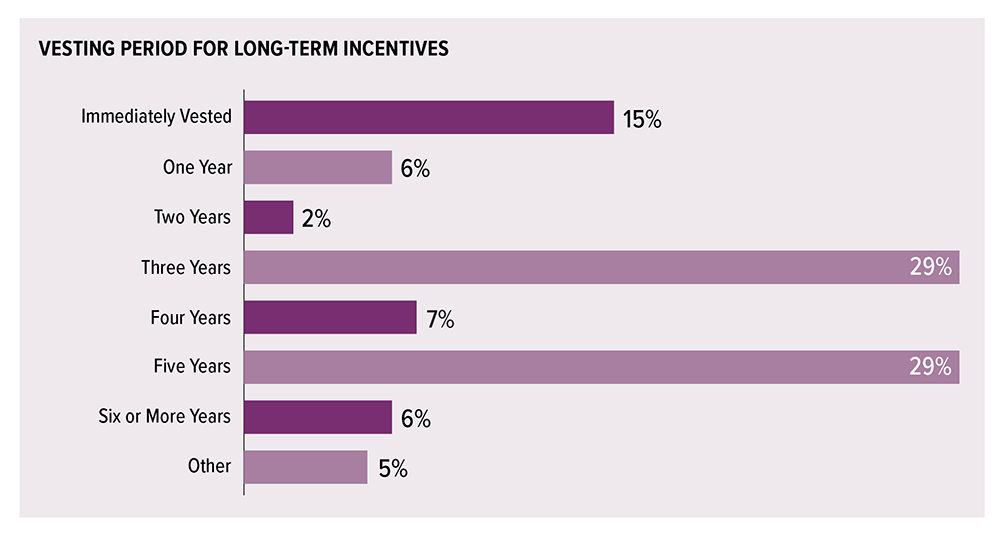
Family-owned companies tend to have longer vesting periods, than public companies, which most commonly have three-year vesting.
Family companies favor longer vesting periods to support retention and to manage liquidity and cash usage. In addition, family businesses often think in terms of generations, so longer vesting periods are aligned with how family businesses operate.
Dividends
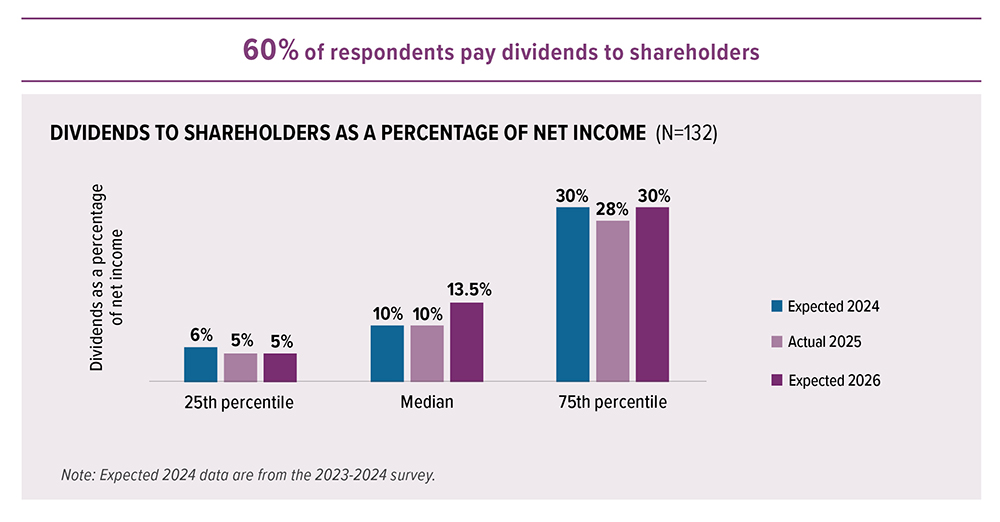
The survey also asked respondents about dividends, which provide value to shareholders of family businesses. Six out of 10 respondents report paying dividends, with the median amount projected to be 13.5% of net income for 2026, up from 10% in 2025.
Looking Ahead
Executive compensation practices are important business tools for family-owned companies and are tailored to their company strategy, size, industry, economics and unique family dynamics. CAP and Family Business will continue to track and report insights on family business executive pay practices in the years to come. Full survey results, which include data by company size, are only provided to survey participants. To participate in the next survey and receive the full data set, please contact David Shaw, publishing director, at dshaw@familybusinessmagazine.com.